
Tag: Informative
-
The Best Whole Home Surge Protection Is Unique to Every Home
The best whole home surge protection is not a one-size-fits-all solution. Every home has different electrical systems, electronics, and potential pathways for surges to enter. Our company’s name is Transient Protection Design because we believe the right approach is to design a surge protection system around the specific needs of each home.
-
Why Pool Control Systems Need Surge Protection
The wiring that connects outdoor pool equipment to the pool panel and controls can also provide a direct path for damaging electrical surges caused by nearby lightning strikes. Without proper surge protection, a single storm can damage expensive equipment both at the pool and inside the home or pool house. Installing TPD surge protection on pool control systems helps extend the life of expensive electronics, reduce service calls, and improve the long-term reliability of the entire pool control system.
-
The History of Surge Protection Devices (SPDs)
Since Benjamin Franklin invented the lightning rod, people have looked for ways to protect homes and electrical systems from lightning and power surges. Since then, many codes, standards, and practices have been created surrounding surge protection including NEC and OSHA requirements that surge protection devices be listed for purpose by a NRTL (Nationally Recognized Testing Laboratory) certified by OSHA. When selecting surge protectors, it is important to choose products certified to ANSI/UL 1449 and listed by a NRTL such as UL, ETL, or CSA. These certifications verify the device has passed rigorous safety and performance testing.
-
Why Gates and Cameras Fail After Storms
Security gates, surveillance cameras, and access control systems are particularly vulnerable to electrical surges caused by nearby lightning strikes. Long wire runs and grounding issues make lightning damage more likely, but implementing a proper TPD surge protection system can greatly lower the risk of your electronics getting damaged due to lightning.
-
What to Look for in Surge Protection Warranties
Some surge suppressor warranties exclude the very surge events the device was designed to protect against. A strong surge protection warranty should clearly state whether the unit is covered if it fails due to lightning or severe surge activity during the warranty period. TPD is one of only a few SPD manufactures that offer replacements for units under warranty including workmanship, defects in materials, and damage from lightning and surges.
-
Why Amplifiers Connected to Outdoor Speakers Need Surge Protection
Outdoor speaker systems are especially vulnerable to lightning-related electrical surges, which is why amplifier surge protection is critical in outdoor audio installations. Without proper protection, surge energy can travel through speaker wiring into the amplifier, where it can destroy sensitive electronic components and spread to other connected equipment.
-
Surge Protection and Voltage Regulation: What's the Difference?
Surge protection and voltage regulation serve completely different purposes, but both are required for a reliable electrical system. Surge protection is the foundation. Voltage regulation helps sensitive equipment operate consistently by maintaining proper voltage to the equipment.
-
Why Do Appliances Fail?
If your appliances are failing prematurely or unexpectedly, one major contributing factor to their failure is due to poor power quality. This is why a layered surge protection approach is paramount for the protection of sensitive electronics.
-
VFD and PLC Systems Tripping, Resetting, and Failing Even When Wired Correctly
VFD and PLC systems resetting, tripping, and failing even when wired correctly is most likely caused by ongoing power disturbances that slowly damage electronic components. Voltage transients, electrical noise, and surge energy entering through power and control circuits degrade equipment until downtime becomes unavoidable. Applying TPD surge protection where failures occur reduces downtime, limits service calls, and extends equipment life.
-
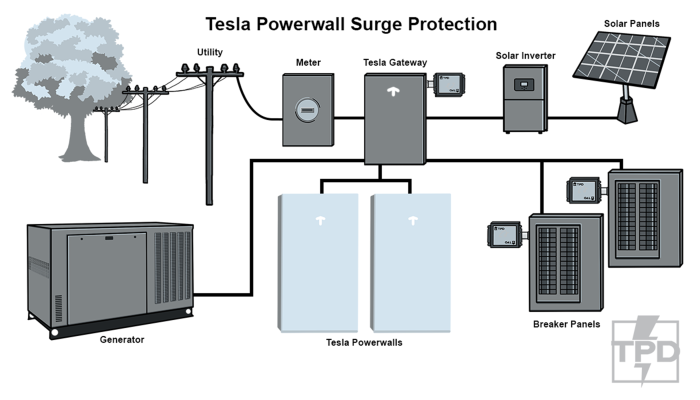
How to Surge Protect a Tesla Powerwall and Solar System
Solar and battery systems, like the Tesla Powerwall, create multiple electrical entry points into homes, leaving it especially vulnerable to surge damage. During a storm, direct or nearby lightning strikes as far away as one-quarter mile can send destructive surges straight to solar inverters and batteries! The best way to prevent damage to a Tesla Powerwall system is to install layered surge protection from TPD.
-
Why Elevators Shut Down, Fault, and Fail
Elevator shutdowns are most often caused by nuisance tripping, control faults, and safety shutdowns triggered by minor electrical disturbances on the power and control circuits rather than mechanical problems. This is why a common solution to recurring elevator problems involves installing surge protection devices (SPDs).
-
Surge Protect Cat6 Network Wires on Both Ends Between Buildings
A critical detail in many installations is ensuring proper protection for network wires that run between buildings. Whether you're installing camera systems or networks, if those wires go outside or cross from one structure to another, they create an easy pathway for dangerous transients and surges. This will likely lead to problems down the road. Future electrical codes are likely to mandate protection for these pathways, and forward-thinking integrators can stay ahead of the curve by protecting them today.