
Cable Satellite and Starlink Surge Protection
Cable, satellite, and Starlink surge protection is important as these systems are common surge entry points into residential and commercial buildings. Low-voltage pathways are especially vulnerable to lightning-induced transients and ground potential differences. Surge events do not require a direct lightning strike. Nearby lightning, utility switching, and grounding differences can introduce damaging transients onto coaxial, ethernet, and satellite cabling, often entering a building through communication lines rather than the main electrical service. Without proper surge protection, grounding, and bonding, communication systems can experience repeated equipment failures, data loss, and downtime affecting AV, security, automation, and network infrastructure.
TPD eliminates transients & surges
which account for 85% to 95% of all
power issues, being the most common
and significantly the most damaging.
How To Surge Protect Cable, Satellite, and Starlink
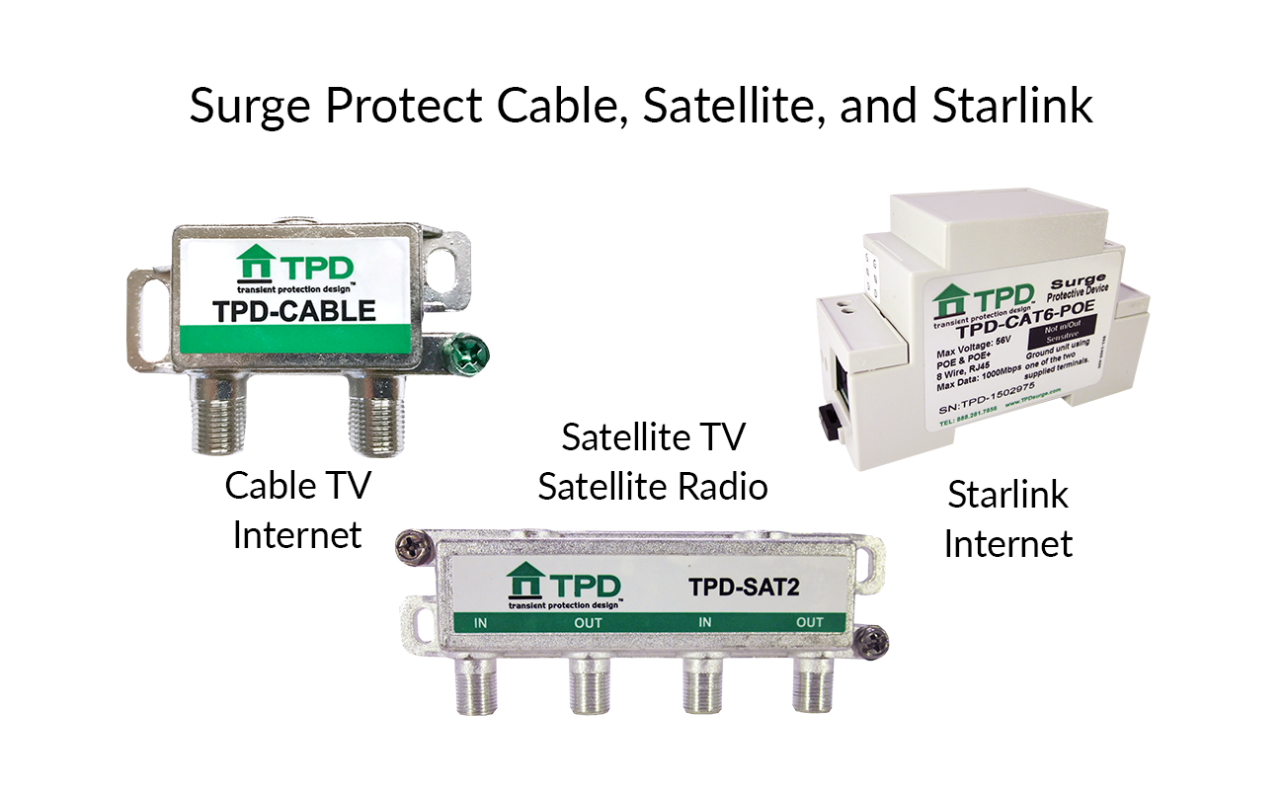
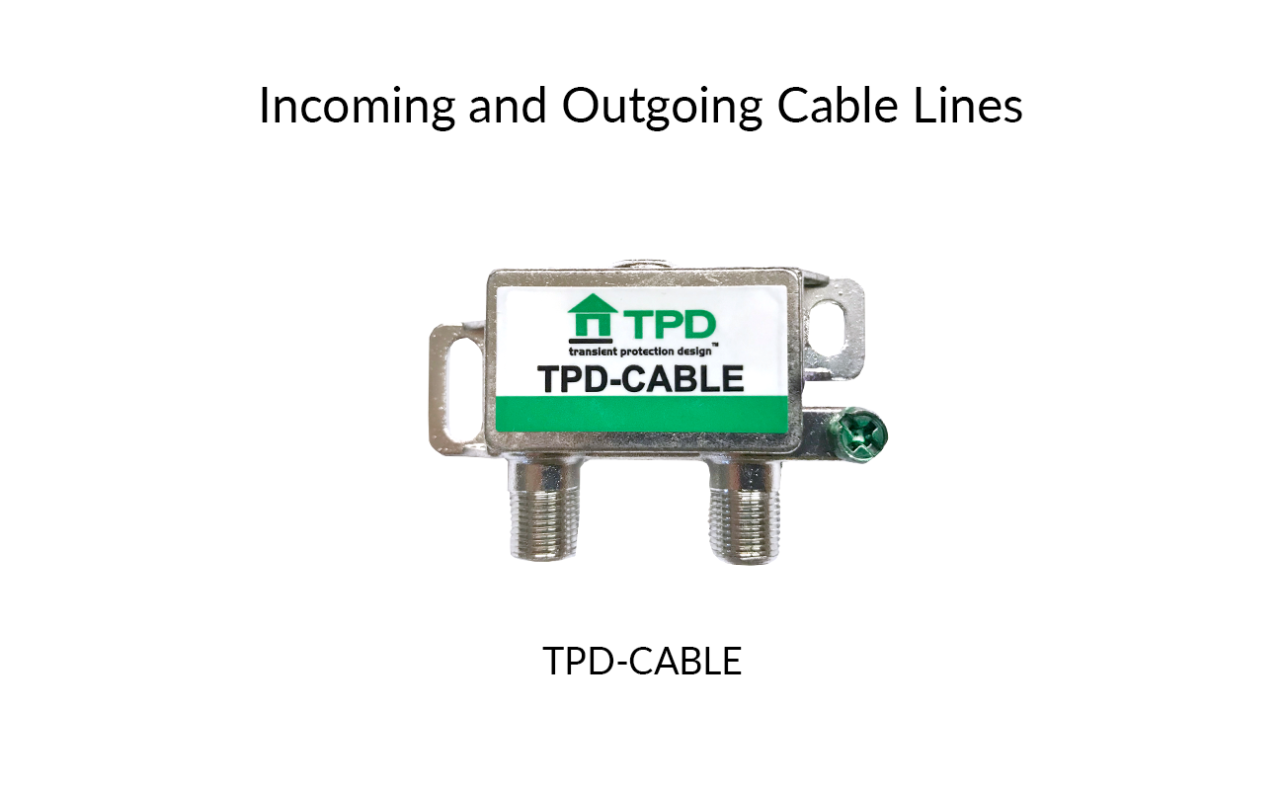
Incoming and Outgoing Cable Lines: TPD-CABLE
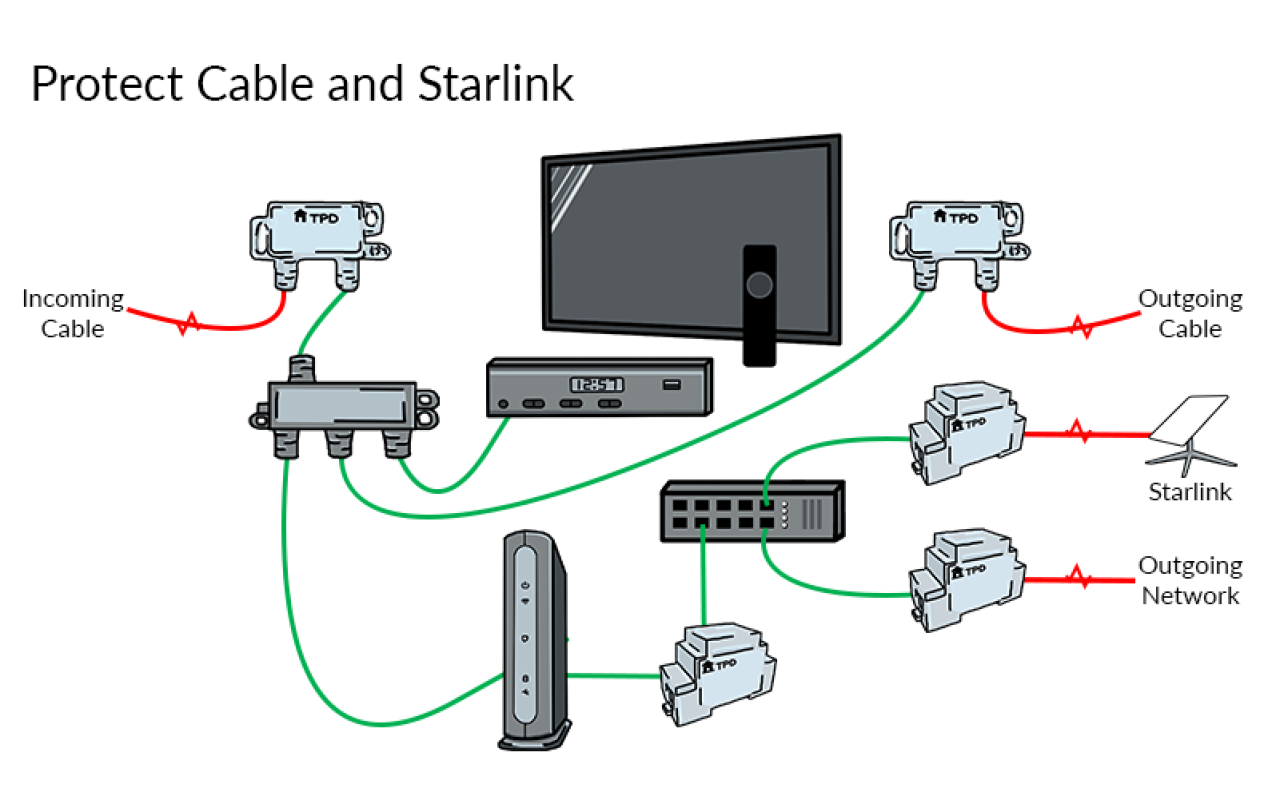
Install the TPD-CABLE on all coaxial lines as they enter and exit the building, including feeds between structures and bond it to the building’s grounding electrode system. While exterior bonding is permitted by code, interior bonding to the electrical grounding system is preferred for improved surge performance and reduced corrosion risk.
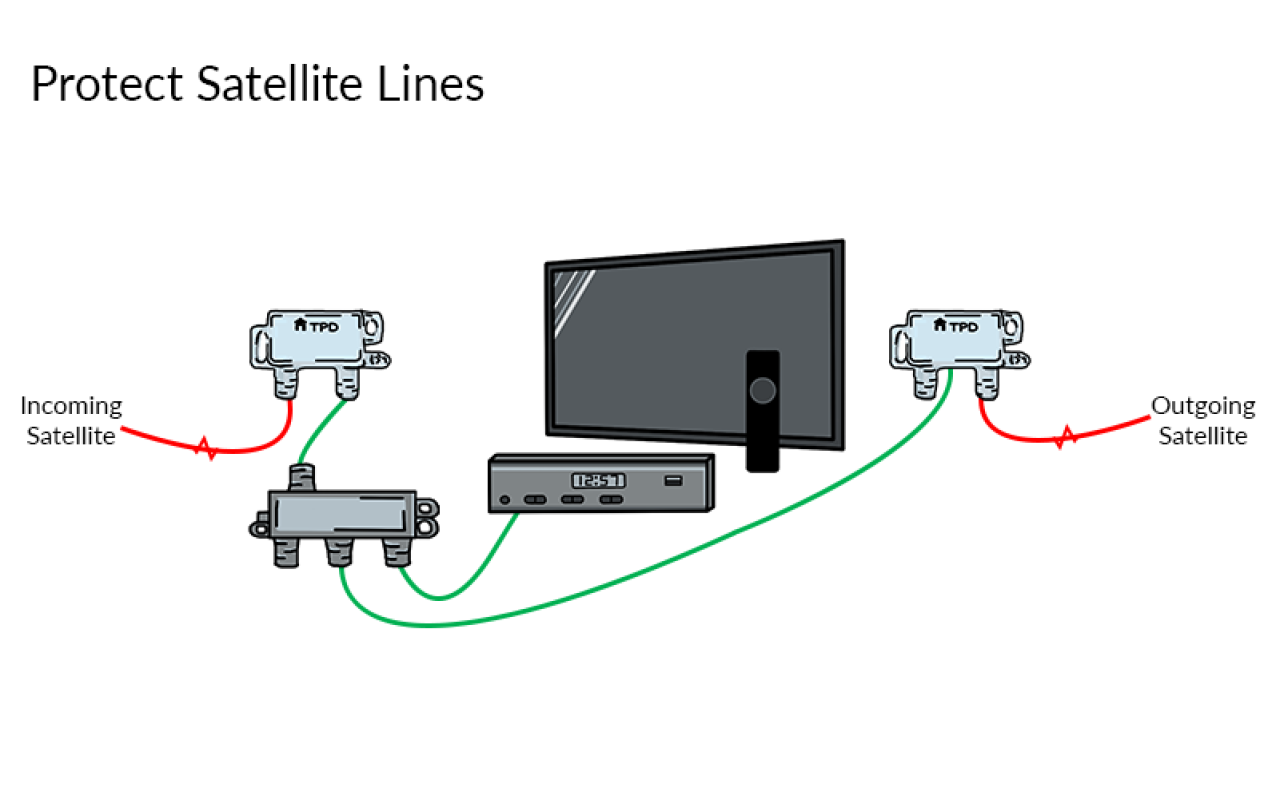
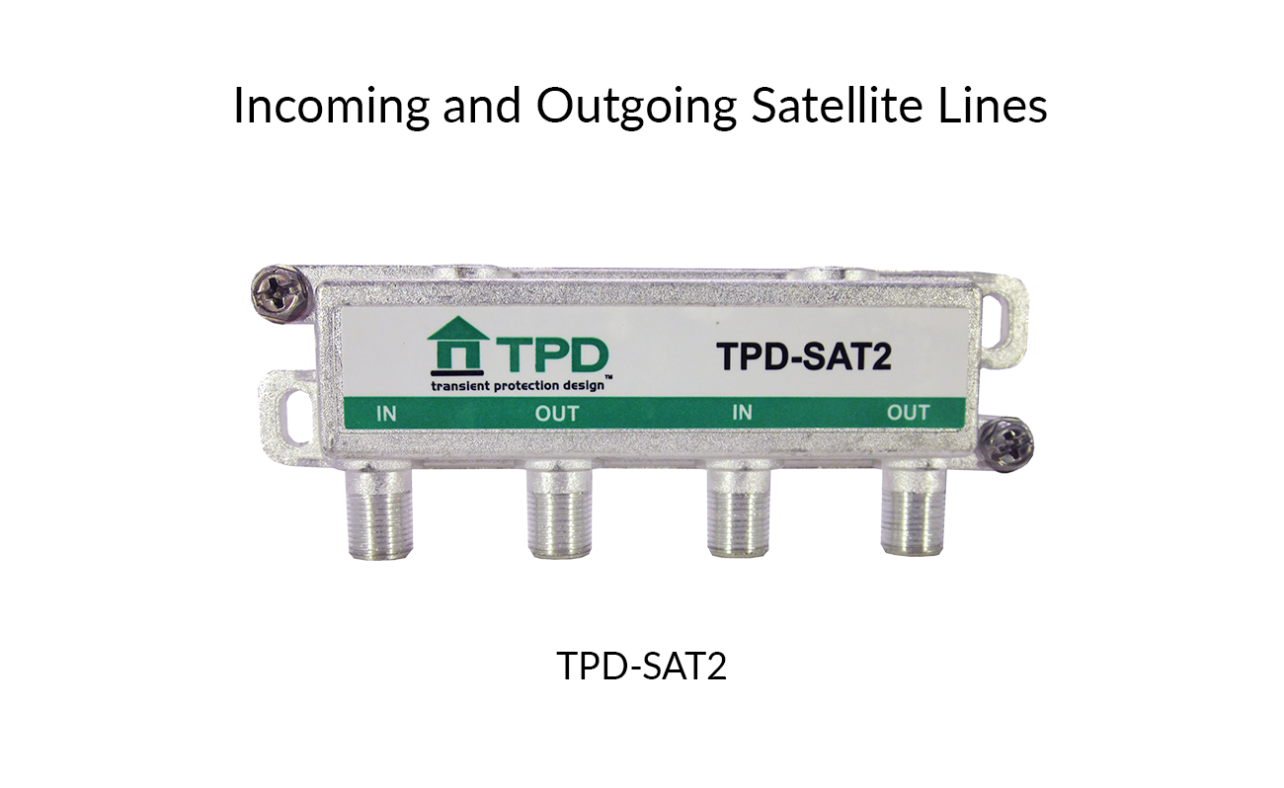
Incoming and Outgoing Satellite Lines: TPD-SAT2Install the TPD-SAT2 on incoming satellite lines and bond it to the grounding electrode system. While exterior bonding is permitted by code, interior bonding to the electrical grounding system is preferred for improved surge performance and reduced corrosion risk. Protect all satellite coaxial lines at building entry points and when routed between buildings.
Incoming Starlink Lines: TPD-CAT6-POE
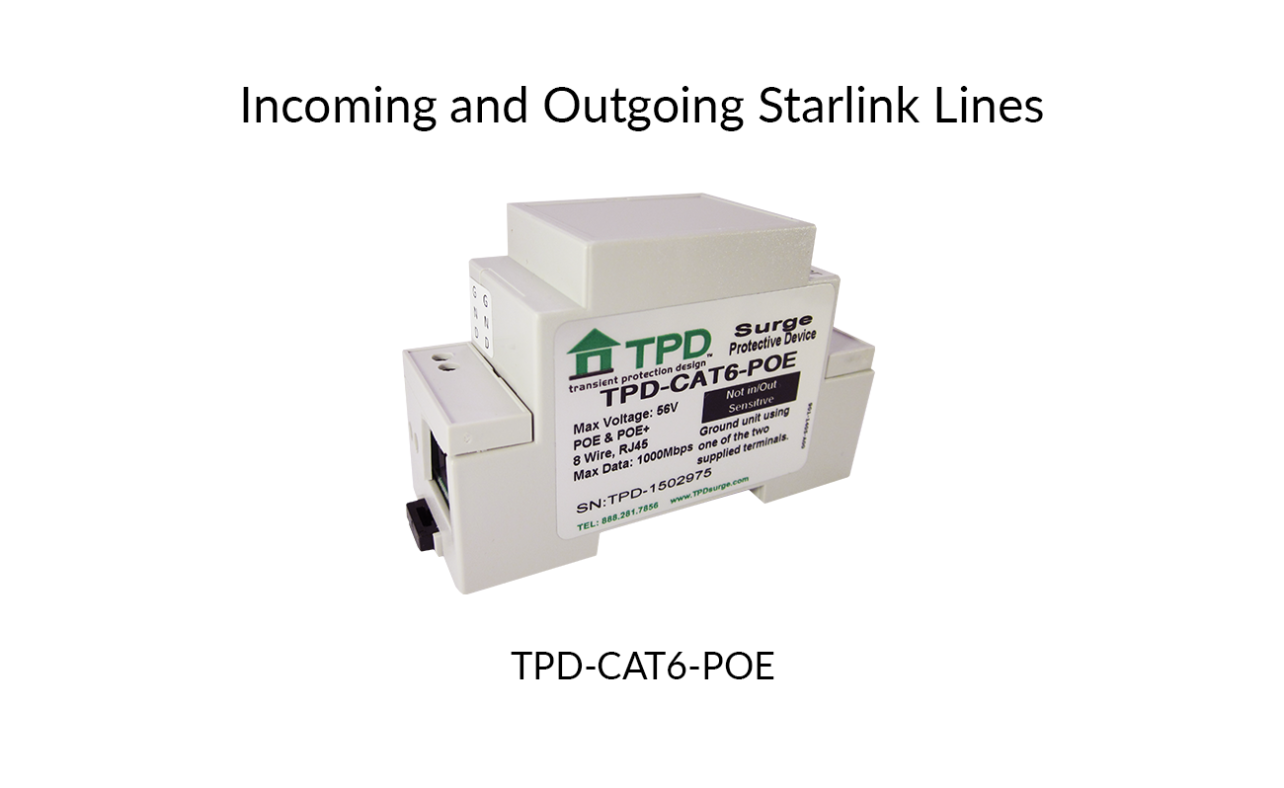
Install the TPD-CAT6-POE on incoming Starlink ethernet lines and bond it to the building’s grounding electrode system. When installation outside the structure is required, the device must be installed in a suitable enclosure. While exterior bonding is permitted by code, interior bonding to the electrical grounding system is preferred for improved surge performance and reduced corrosion risk. A Starlink-to-RJ45 adapter may be required depending on the system configuration.
Applications and Common Problems Solved
Low Voltage Equipment Failures
Cable lines are the most common source of low-voltage equipment failures in both residential and commercial properties. Damage typically occurs when the incoming coax is not surge protected or bonded correctly to the electrical grounding system. Installers often rely on whatever appears grounded, and bonding is frequently omitted, especially when the cable entry point is inconvenient. Exterior bonding of the coaxial sheathing alone addresses shock hazards but does not prevent surge energy from entering the building on the center conductor. Installing the TPD-CABLE inside the structure bonds both the coaxial sheathing and center conductor of the incoming cable to the electrical system grounding electrode, ensuring cable and power rise and fall together and eliminating repeated equipment failures.
Surges from Satellite Systems
Satellite systems are commonly affected by nearby lightning rather than long utility runs. Certain NEC allowances permit satellite installations to enter a structure without bonding when mounted within the halo of the building, resulting in many residential and multi-dwelling installations being left unbonded. In larger homes and custom installations, failures occur when televisions and control systems are connected to multiple grounding paths from power, network, and satellite feeds installed remotely or on adjacent structures. Long satellite cable runs used to conceal dishes increase ground potential differences. During surge events, connected equipment becomes the equalization path, damaging HDMI ports, inputs, and control electronics. The TPD-SAT2 bonds and protects satellite lines at the point of entry, eliminating ground potential differences and preventing surge-related failures.
Surges from Starlink Systems Installed at Height
Starlink systems behave similarly to satellite systems. While not tied to street utilities, installation height significantly increases exposure to lightning-induced transients. Starlink units are commonly mounted on roofs, poles, fences, or elevated structures to clear tree lines. Like cable and satellite systems, Starlink feeds must share the same ground reference as the electrical system. When they do not, surge energy is forced through routers, network switches, and connected electronics inside the building. Using the TPD-CAT6-POE on the incoming Starlink feed (with a Starlink-to-RJ45 adapter when required) bonds the system to the electrical grounding electrode and eliminates damaging ground potential differences.
Commercial Buildings & Strip Malls
Commercial buildings frequently experience communication-related surge failures due to shared cable and data pathways serving multiple tenants. While each suite typically has its own electrical service and grounding system, communication lines are often distributed from a common entry point or shared across ceilings. Surge energy travels along these shared pathways and damages electronics in multiple suites simultaneously, commonly affecting medical offices, retail spaces, and multi-tenant facilities. Installing the TPD-CABLE at the communication entry point corrects bonding deficiencies, limits surge propagation between tenants, and protects mission-critical network infrastructure.
Codes, Standards, and Industry Guidance
The National Electrical Code (NEC) requires cable, satellite, and data lines to be bonded to the grounding electrode system at the building’s main service entrance. This establishes a common grounding reference for power and communications systems and reduces exposure to lightning-induced surges, utility switching transients, and ground potential differences. In commercial installations, grounding and bonding of communication pathways is a code requirement, not a recommendation. Failure to comply commonly results in widespread equipment damage during surge events. ll TPD recommendations are backed by the Institute of Electronics and Electrical Engineers for protecting and grounding of sophisticated electronics.
The Importance of Cable, Satellite, and Starlink System Surge Protection
Uninterrupted Signal and Connectivity
Incoming data feeds are the gateway to the digital world, powering daily activities and business operations. TPD surge protection products shield against electrical damage, ensuring uninterrupted connectivity. Whether it's in your home or a commercial setting, surge protection improves reliability of access to online services.
Protecting Valuable Equipment
Data systems encompass valuable components, including satellite dishes, modems, and data servers. Surge-induced damage can lead to costly repairs or replacements of these components. TPD surge protection reduces the risk of electrical damage and extends the lifespan of your equipment in both residential and commercial applications.
Data Security and Privacy
In both residential and commercial environments, disruptions in connectivity can lead to data loss and compromised security. TPD surge protection ensures data security and safeguards privacy in both contexts.
Cost Savings
Repairing or replacing equipment can be financially burdensome. TPD surge protection helps defend against electrical damage, mitigating the risk of unexpected repair expenses. Whether it's optimizing your home's internet setup or ensuring uninterrupted business operations, surge protection contributes to cost savings.
Operational Continuity
In commercial settings, data systems are integral to various operations, including communication, data management, and e-commerce. Surge-induced failures can disrupt business activities, impacting customer satisfaction and revenue. TPD surge protection plays a pivotal role in maintaining operational continuity, ensuring seamless connectivity for both businesses and clients.
Environmental Resilience
Internet equipment is often exposed to power fluctuations and surges. Surge-induced equipment failures can result in increased electronic waste. TPD surge protection helps maintain the resilience of internet equipment, aligning with sustainability goals and ensuring the reliability of internet systems.