
Outdoor Speaker Pathway Surge Protection
Outdoor speaker surge protection from TPD shields amplifiers by protecting the wire pathways driving outdoor speakers. Installing a TPD-AmpPro as the speaker wires leave the building prevents surge energy from entering the structure and damaging amplifiers, racks, and connected equipment. Long outdoor speaker runs are highly susceptible to lightning-induced surges, which travel directly back toward the amplifier unless intercepted. The TPD-AmpPro captures that unwanted energy and safely diverts it to ground before it reaches sensitive electronics.
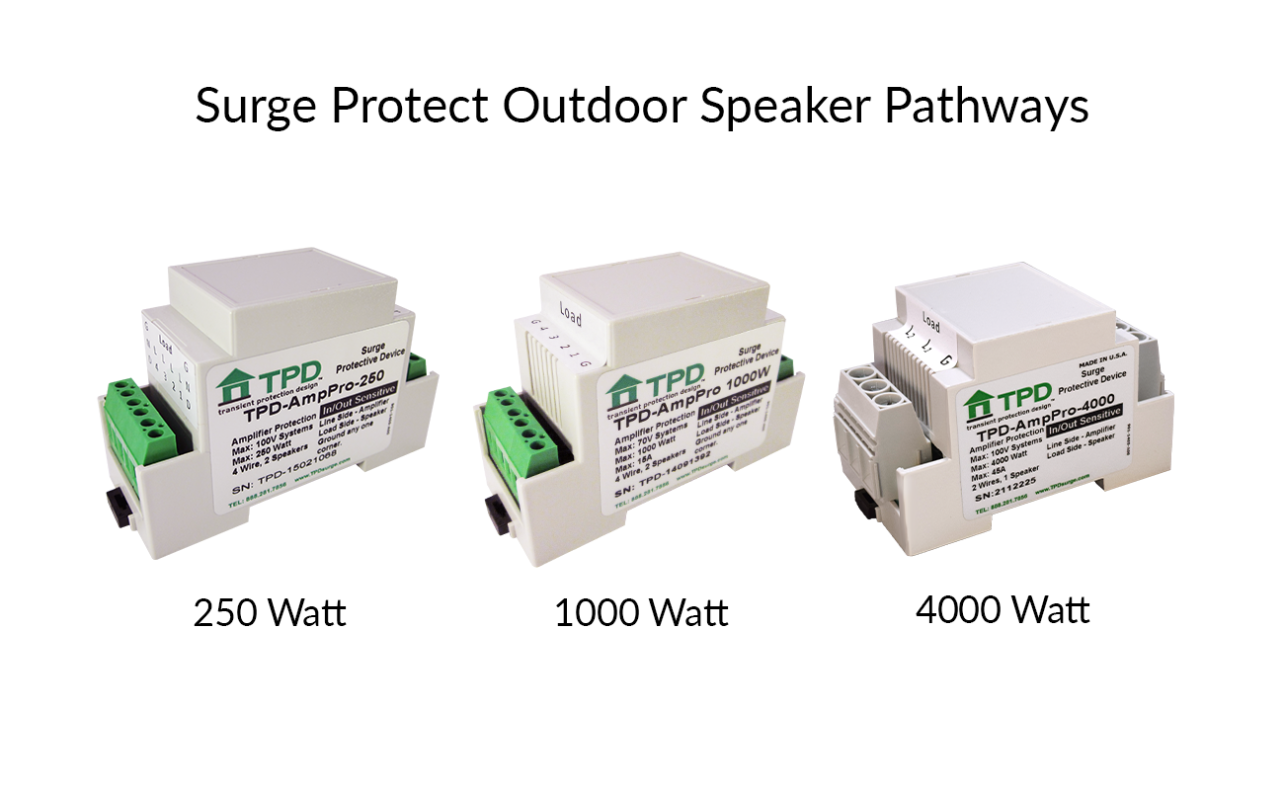
TPD-AmpPro-250 250 Watt Pathways
TPD-AmpPro-1000 1000 Watt Pathways
TPD-AmpPro-2000 2000 Watt Pathways
TPD-AmpPro-4000 4000 Watt Pathways
How to Surge Protect Outdoor Speaker Pathways
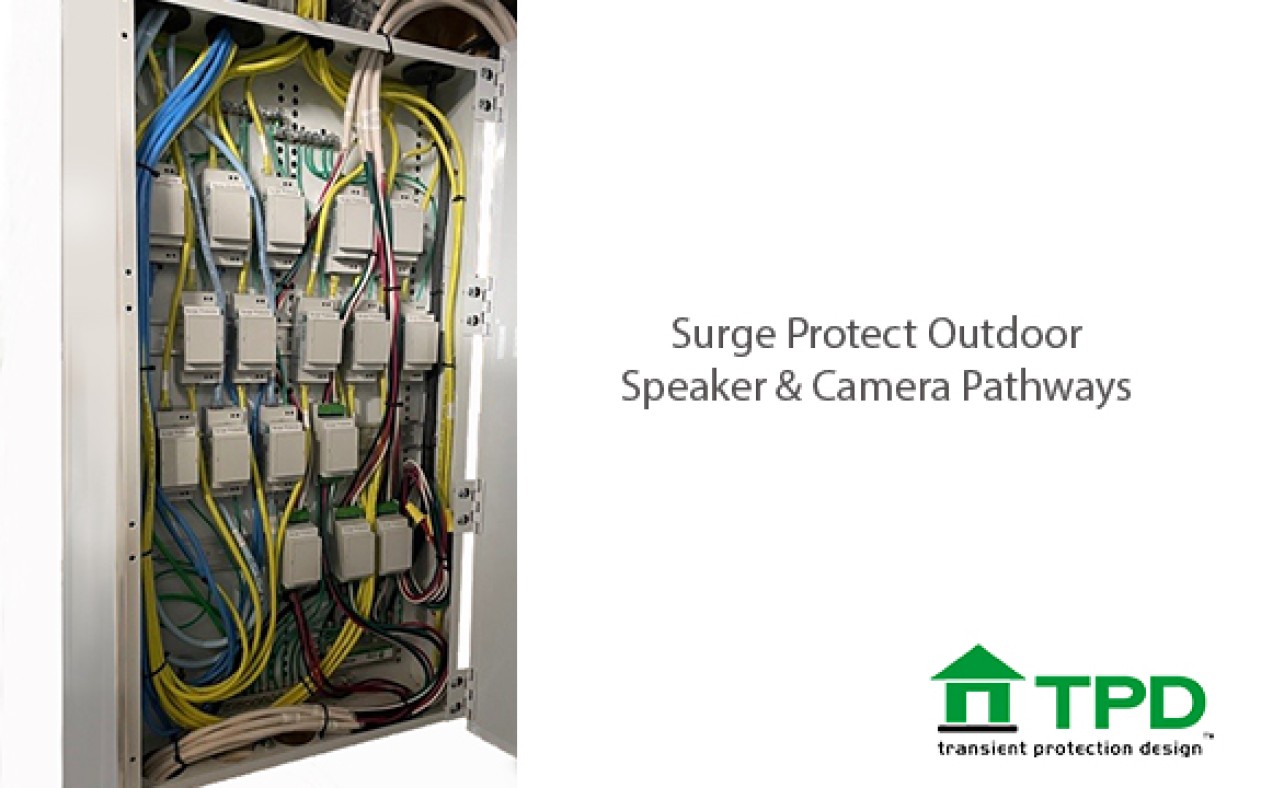
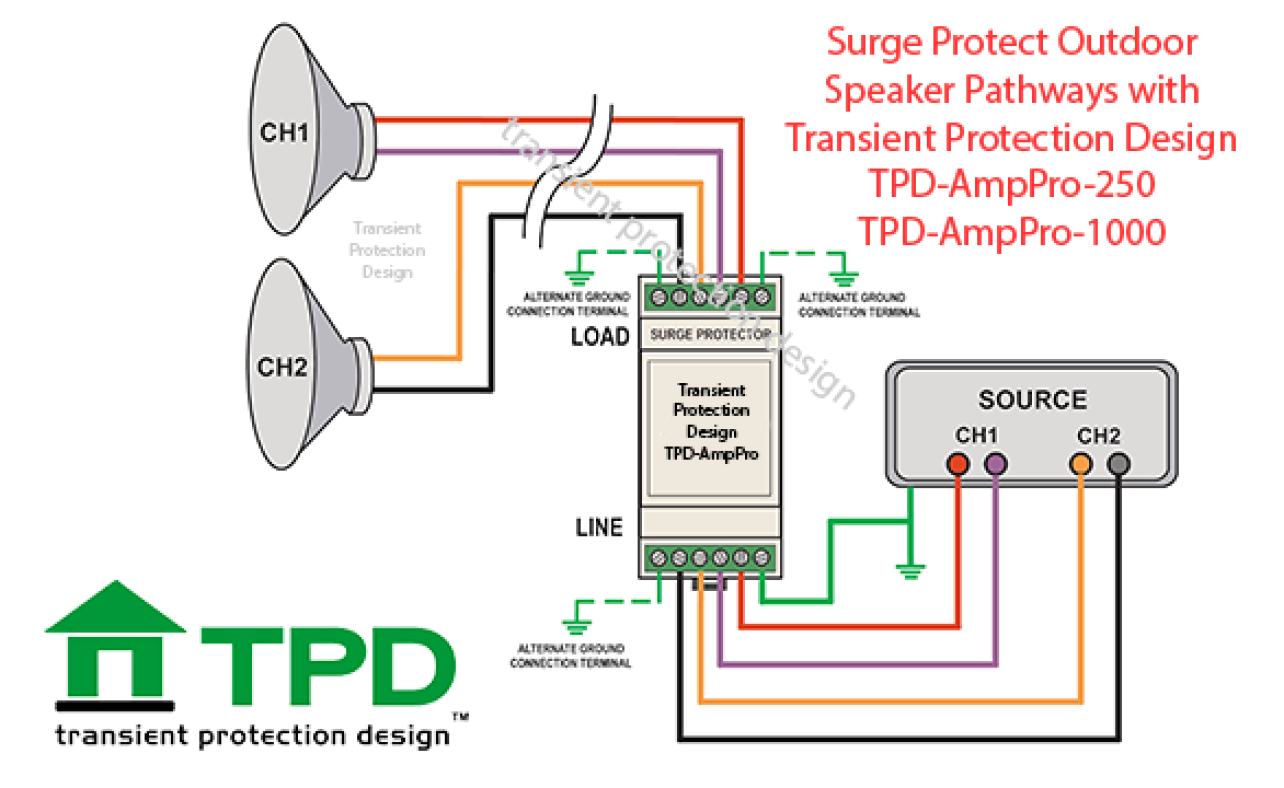
Install the TPD-AmpPro on outdoor speaker pathways. The unit can be installed near the amplifier and bonded to electrical ground. If a dedicated ground is not available, it may be bonded to the grounding point on the back of a rack-mounted surge protector. If grounding is easier where the speaker wires enter the building—such as near a breaker panel or other accessible grounding point—the TPD-AmpPro may be installed there instead.
2 Channel 250 Watt Pathways: TPD-AmpPro-250
2 Channel 1000 Watt Pathways: TPD-AmpPro-1000
1 Channel 2000 Watt Pathways: TPD-Amp-Pro-2000
1 Channel 4000 Watt Pathways: TPD-AmpPro-4000
TPD-AmpPro units are compatible with 2/4/6/8 ohm and 70V distributed audio systems, have a one-nanosecond response, ten-year unlimited free replacement, and are DIN-rail or screw-down installation indoors or inside an outdoor enclosure.
How It Works
When an outdoor speaker system is installed, the long copper runs become an antenna for lightning energy. A strike doesn’t need to be close. Lightning a quarter mile away can inductively couple onto the speaker wires. Once that surge finds copper, it follows the path into the structure, through the amplifier outputs, and then into connected electronics. The TPD-AmpPro intercepts surges at the speaker pathway and redirects it to ground before it reaches the amplifier, preventing blown output channels, DSP lockups, intermittent faults, and amplifier destruction.
Applications and Common Problems Solved
Residential Outdoor Audio & Backyard Entertainment Zones
Custom homes often run long speaker paths from a centralized rack to the pool, deck, or landscape audio zones. Any nearby lightning event induces voltage onto those wires and sends it directly into the amplifier channels. Dealers commonly encounter dead channels, static, intermittent dropouts, and rack failures after storms. The TPD-AmpPro removes surge energy at the pathway, keeping the rack safe and eliminating repeat service calls.
Large-Scale Outdoor Audio for Campuses, Parks & Experience Venues
Distributed outdoor audio systems span large areas and use long conduit runs, increasing exposure to induced lightning and voltage differences betwen buildings and grounds. TPD surge protection stabilizes these systems so audio processing, paging, and mass-notification zones remain operational without resets or equipment replacement.
High-Power Amplifiers
High-power amplifiers from brands like Powersoft, Crown, QSC, etc. that feed outdoor speakers are extremely sensitive to ground shifts and induced voltage on long speaker paths. Even small surges can damage output boards or freeze DSP control. The TPD-AmpPro protects the speaker outputs and internal circuitry, preventing dead channels, locked DSPs, and catastrophic failures caused by outdoor surge energy.
Racetracks, Outdoor Arenas & Public Event Audio
Racetracks and street-based PA systems often run miles of cable along poles, steel, and temporary installations and is one of the most surge-prone environments in the industry. Without pathway protection, repeated amplifier failures after storms are common. With TPD-AmpPro surge protection installed, PA systems remain stable and announcements stay reliable throughout the season.
Public Transit & Mass-Notification Systems
Transit stations, subways, launch facilities, and campuses depend on outdoor speakers that must work during the worst electrical conditions. Failures often come from long 70V/100V lines, shared grounds, and induced surges entering remote speaker circuits. TPD-AmpPro surge protection keeps amps, DSPs, power supplies, and speaker lines stable and operational for life-safety communication.
Why Outdoor Speaker Protection Matters Today
Outdoor systems now include more processing, more power, and longer wiring than ever before. Lightning activity is increasing, the grid is becoming less stable, and modern audio equipment is far more sensitive and costly than older analog systems. TPD surge protection ensures reliable performance for everything from a backyard patio zone a multi-acre them park and other public venues. Outdoor speaker systems stay online, amplifiers last longer, and weather-related failures are stopped with TPD-AmpPro surge protection in place.
Codes, Standards, and Industry Guidance
While the National Electrical Code does not explicitly mandate surge protection on speaker pathways, multiple standards and recommended practices support protecting long outdoor conductors that can introduce lightning-induced surges into buildings:
NEC Article 725 & 640
Addresses audio and signaling circuits that extend beyond a structure as potential surge entry points and emphasize proper grounding and bonding.
NEC Article 250
Requires effective grounding and bonding to control voltage differences and safely dissipate transient energy.
IEEE 1100 (Emerald Book) and IEEE C62
Identify long outdoor conductors as common coupling paths for lightning-induced surges and recommend pathway-level surge protection for sensitive electronic systems.
Mass-notification and public-address system design guidelines consistently emphasize reliability during adverse electrical conditions, where surge protection at outdoor signal pathways is considered best practice. TPD-AmpPro surge protection aligns with these engineering principles by intercepting surge energy at the speaker pathway and bonding it safely to the building grounding system before damage occurs.