
Lighting System Surge Protection
Lighting system surge protection for systems manufactured by companies such as Lutron, Crestron, Control4, Hinkley, and LiteTouch is critical due to the complex, integrated, and interconnected nature of modern lighting systems. These systems rely on sensitive processors, dimming modules, LED drivers, low-voltage controls, and network communications that are highly vulnerable to surge energy. Proper surge protection is required to maintain system reliability, prevent repeated failures, and preserve long-term performance.
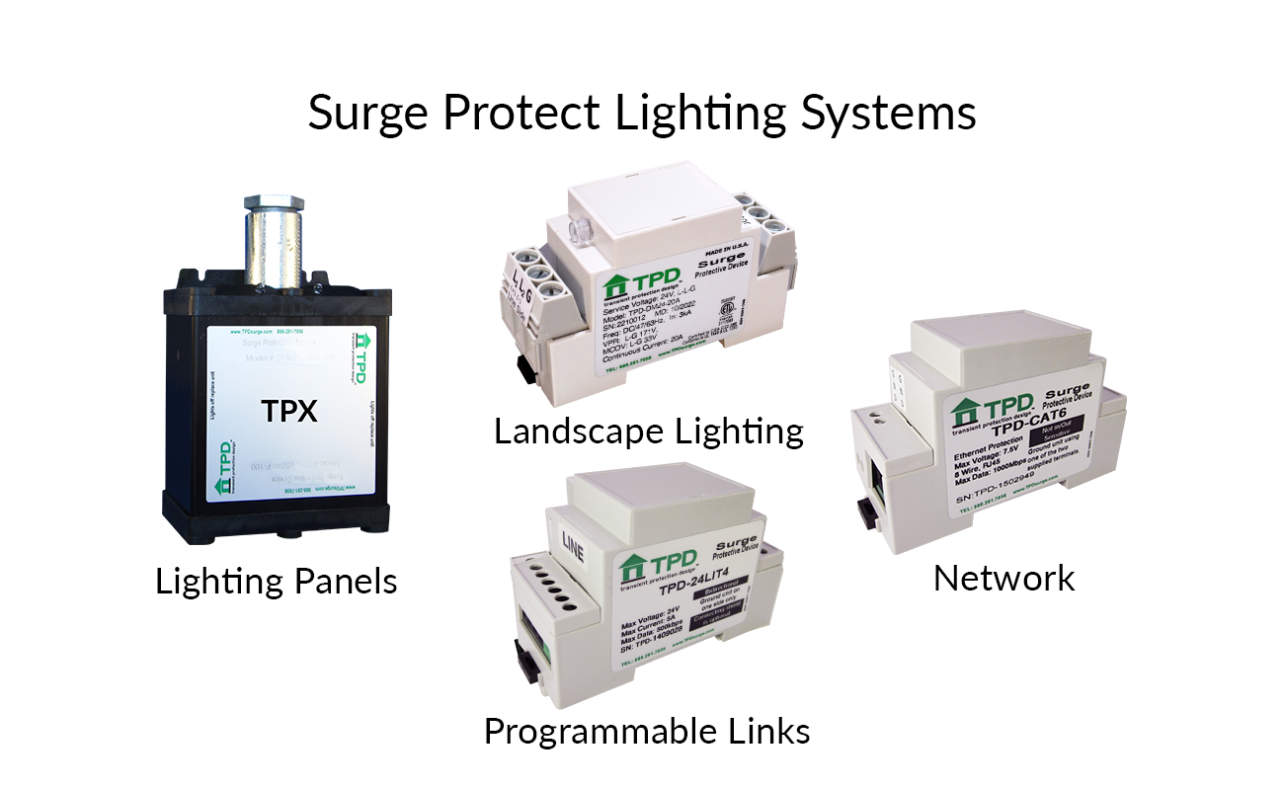
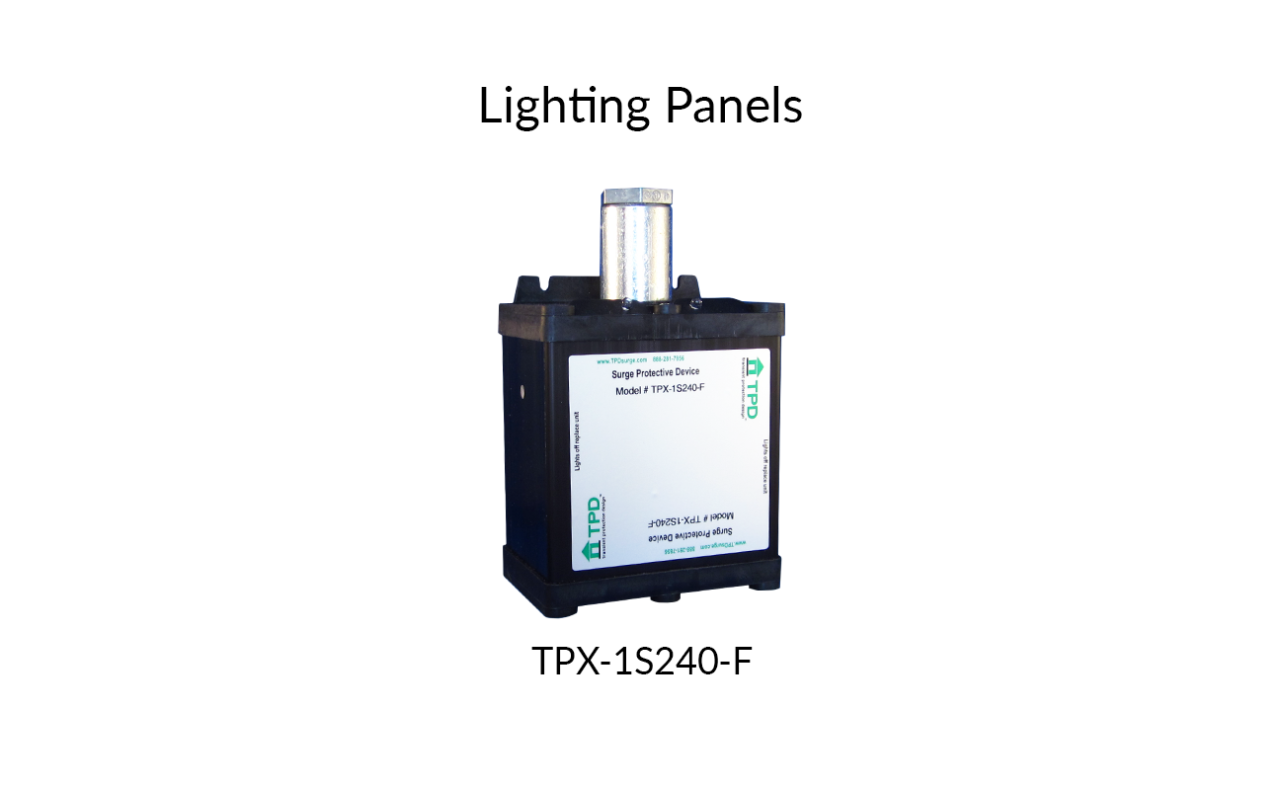
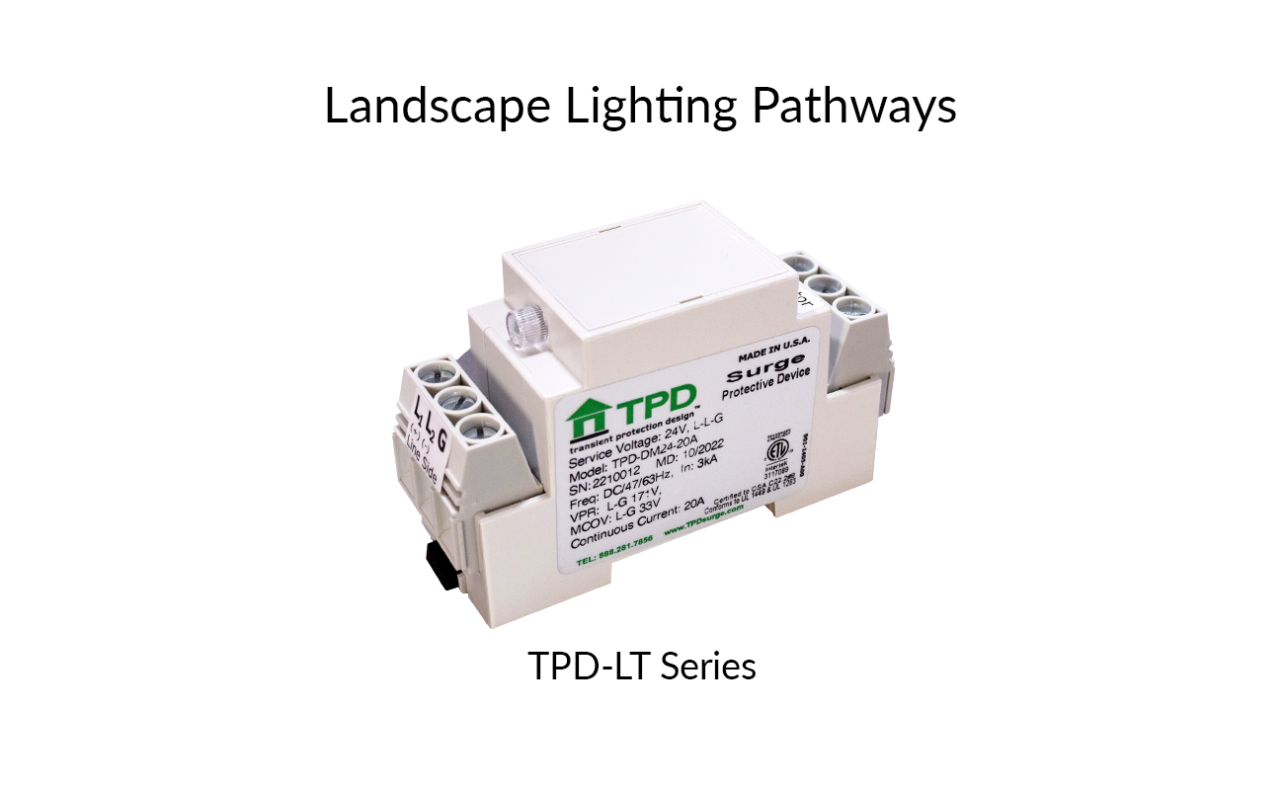
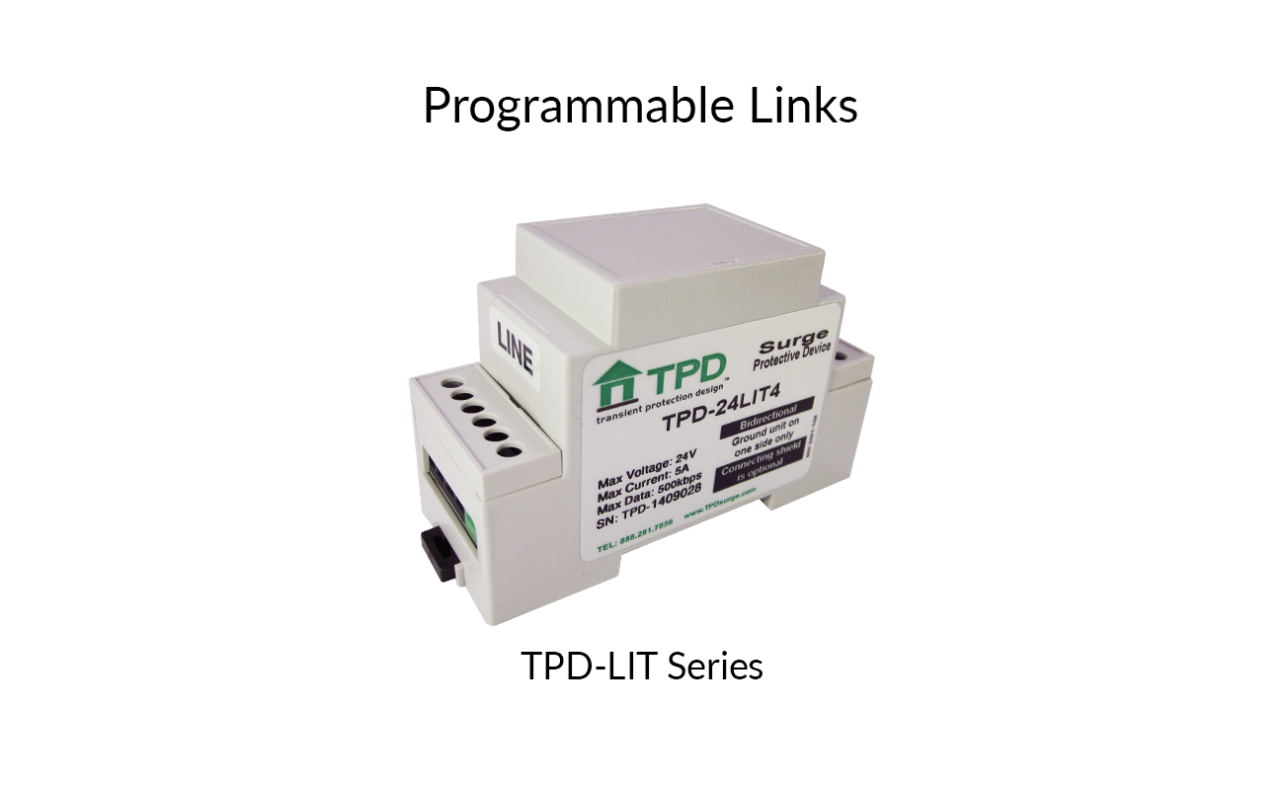
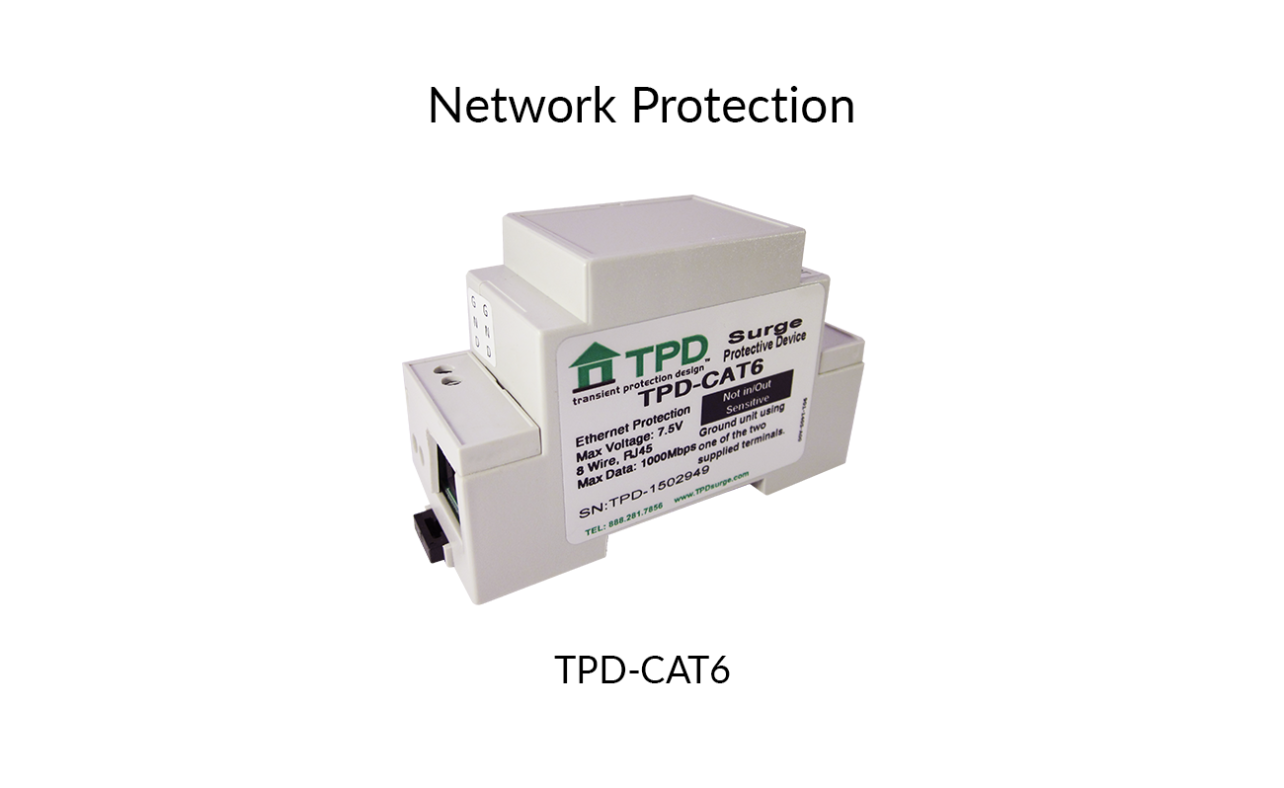
TPX-1S240-F Lighting Panels
TK-LT120-20A-DIN2 Landscape Lighting Pathways
TPD-24LIT4 Programmable Links
TPD-CAT6 Network Protection
TPD eliminates transients & surges
which account for 85% to 95% of all
power issues, being the most common
and significantly the most damaging.
How to Surge Protect Lighting Systems
Lighting Panels: TPX-1S240-F
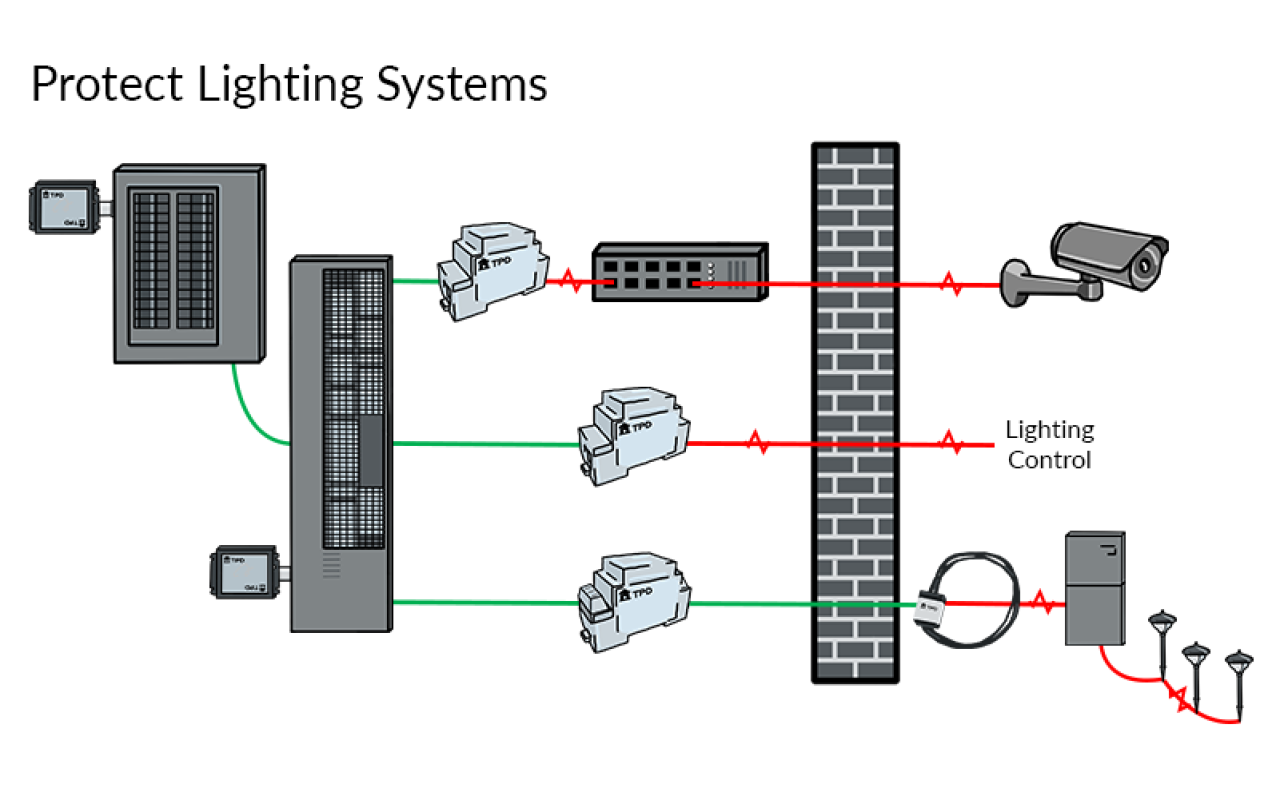
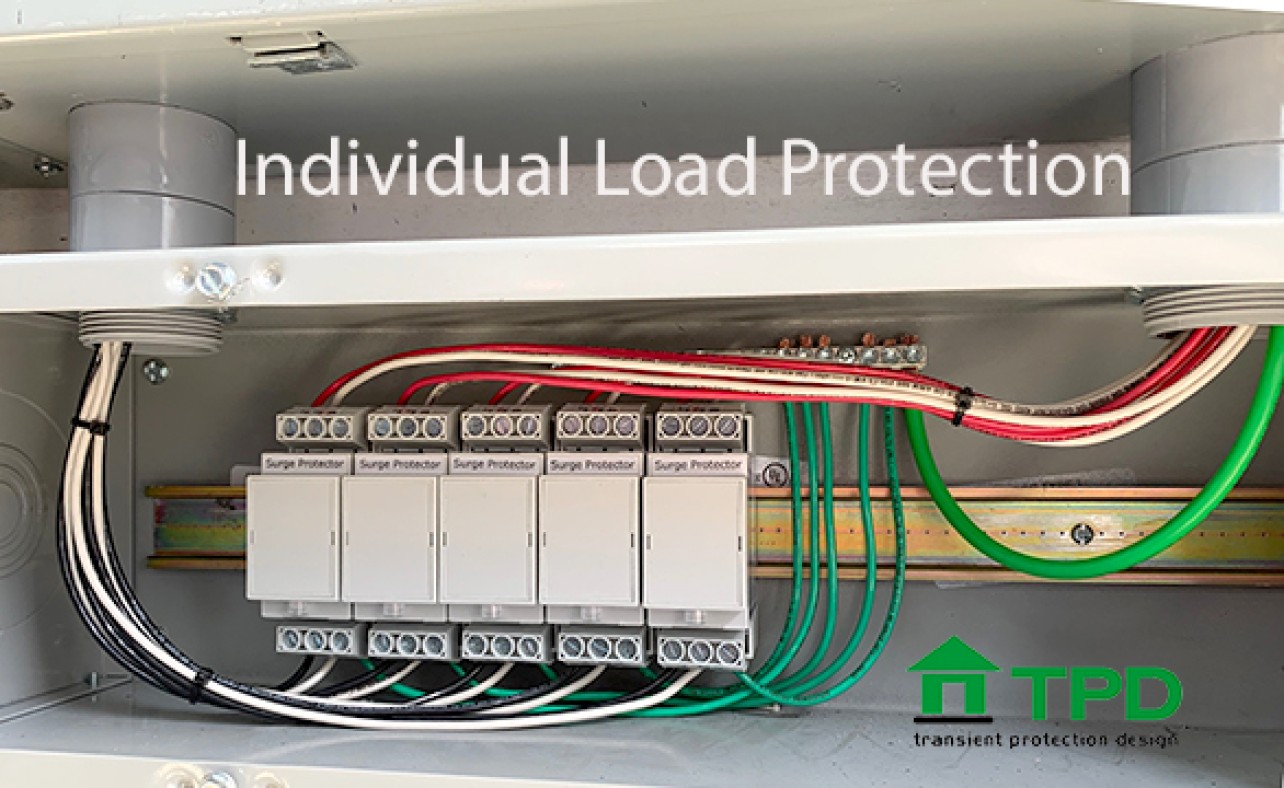
Install the TPX-1S240-F-100 on all breaker panels feeding lighting panels. If the lighting panel is main-lug-only, install an additional TPX-1S240-F-100 directly at the lighting panel. Layered surge protection is best practice and aligns with IEEE recommendations for powering sensitive electronic loads.
Landscape Lighting: TK-LT120-20A-DIN2
Surge protect modules from landscape lighting pathways. If a lighting transformer is being used, the LT unit will protect the transformer from building power but would not protect the transformer from lightning outside.
Lighting Transformers: TPD-24V3W
Install the TPD-24V3W inside the lighting transformer to protect both the transformer and low-voltage lighting outputs from lightning-induced surges. This device also helps protect downstream fixtures as surge energy propagates through the system. Units may be installed remotely at the base of poles or trees to reduce failures and eliminate repeated service access.
Lighting Control Wiring: TPD-24LIT4
Install the TPD-24LIT4 in the lighting panel on lighting control wiring that runs between buildings or exceeds 200 feet. Long low-voltage control runs are common surge entry points and frequently cause processor and module failures.
Network Connection: TPD-CAT6
Install the TPD-CAT6 in the lighting panel on Ethernet or control networks. Surges entering on network pathways can disrupt processors and create ground potential differences that damage lighting control electronics.
Applications and Common Problems Solved
Whole Home Lighting Control
Modern lighting systems depend on sensitive processors, dimming modules, LED drivers, and communication networks. These components are vulnerable to surges traveling on line voltage, low-voltage control wiring, and network pathways. TPD surge protection stabilizes lighting processors, preventing resets, lockups, flicker, and module failures so scenes, schedules, and automation continue operating.
Luxury Custom Homes and Large Residential Systems
Custom homes often contain multiple lighting panels distributed across large properties with long circuit runs through attics, crawl spaces, detached structures, and service yards. These pathways are highly susceptible to lightning-induced surge energy. TPD protects lighting panels, processors, control wiring, network feeds, landscape transformers, and power supplies, eliminating nuisance failures and intermittent system behavior.
Landscape and Exterior Lighting Systems
Lightning frequently damages indoor lighting systems by entering through outdoor lighting conductors. Induced voltage on exterior lighting runs travels back into indoor lighting panels and processors, damaging dimming modules and control electronics. TPD has been addressing these failure modes for over a decade.
Architectural, Bridge, and Commercial LED Lighting
Architectural and decorative lighting systems use long outdoor wire runs mounted on steel structures, poles, and exposed environments. These installations are highly surge-prone due to distance, exposure, and grounding conditions. TPD surge protection helps prevent damage to LED drivers, controllers, and networked lighting modules, reducing outages and maintenance costs.
Lighting Transformers, Power Supplies, and Remote Enclosures
Modern LED landscape transformers are often installed outdoors and far from the main electrical service. These transformers are fully exposed to surge energy. TPD offers compact surge protection devices, the TPD-24VDC, that install directly inside transformer enclosures, protecting both low-voltage outputs and internal electronics at a frequently overlooked location.
LED Flicker Reduction and Power Stability
Flickering lights are frequently blamed on bad power, failing drivers, or loose neutrals. In many cases, the root cause is micro-surges and induced voltage on shared electrical pathways. When TPD surge protection is installed at the panel and at lighting system entry points, flicker incidents drop significantly because micro-surges are removed before reaching LED drivers. Read more about how to fix flickering lights below.
How to Fix Flickering Lights
Install the TPX-1S240-F-100 surge protector with EMI/RFI filtering on all breaker panels feeding the lighting system. This protects lighting loads from disturbances created by motors, solenoids, dimmers, and switching loads on the same panel. Surge protection is the correct starting point for flicker mitigation. If flicker persists, TPD voltage regulation may be required in addition to surge protection.
Codes, Standards, and Industry Guidance
Lighting systems incorporate power conductors, low-voltage control wiring, and network communications, all of which can serve as surge entry paths. Code compliance establishes minimum requirements, while IEEE recommended practices guide system reliability and long-term performance.
NEC Article 242
Addresses the application and installation of surge protective devices (SPDs) and supports the use of Type 1, Type 2, and Type 3 devices at services, distribution panels, and equipment-level connection points. Service-level protection alone does not eliminate the need for downstream surge protection at lighting panels and sensitive electronic loads.
NEC Articles 725, 760, 800, and 840
Address power-limited circuits, control wiring, signaling, and communications pathways commonly used in modern lighting control systems. Long control runs and network pathways are frequent sources of surge energy and ground potential differences, particularly when lighting systems extend outdoors or between structures.
IEEE C62.41 and C62.45
Identify lighting and control electronics as surge-vulnerable loads and support staged surge protection based on exposure, wiring length, and installation environment. Outdoor lighting, remote transformers, and long feeder or control runs represent higher-exposure locations.
IEEE Recommended Practices support layered surge protection at service entrances, distribution and lighting panels, and at equipment or pathway interfaces. This staged approach reduces stress on lighting processors, dimming modules, LED drivers, and network interfaces. Proper surge protection, bonding, and grounding of lighting system power, control, and network pathways are essential for code-compliant, reliable lighting installations.
The Importance of Lighting System Surge Protection
System Reliability
Lighting systems support safety, security, automation, and architectural presentation. Surge-related failures can cause loss of lighting control, processor resets, and module damage. Proper surge protection maintains system reliability and consistent operation.
Protection of Electronic Components
Lighting systems contain sensitive electronics including processors, dimming modules, LED drivers, and control interfaces. Surge energy can degrade or destroy these components. TPD surge protection reduces electrical stress and extends equipment life.
Flicker Reduction and Performance Stability
Micro-surges and induced voltage contribute to flicker, dimming anomalies, and intermittent behavior. Panel-level and pathway surge protection removes these disturbances before they reach lighting electronics.
Reduced Service Calls and Downtime
Surge-related failures result in nuisance service calls, troubleshooting time, and module replacement. Surge protection minimizes unplanned maintenance and improves long-term system stability.
Code Compliance and Best Practices
Modern lighting installations increasingly fall under NEC surge protection requirements and IEEE recommended practices. Applying surge protection supports compliance, protects downstream electronics, and aligns with industry standards.
Transient Protection Design surge protection for lighting systems is essential for preserving uninterrupted illumination, protecting valuable equipment, promoting energy efficiency, enhancing aesthetics and safety, achieving cost-efficiency, ensuring operational continuity, and promoting environmental resilience in both residential and commercial applications. It provides peace of mind, reliability, and beautifully lit indoor and outdoor spaces for homeowners and businesses alike, ensuring that spaces remain safe, inviting, efficient, and free from disruptions, day and night.