
Generator and Automatic Transfer Switch Surge Protection
Generator and automatic transfer switch surge protection for ATS and generators manufactured by companies such as Caterpillar, Cummins, Generac, and Kohler increases the reliability of power when utility service fails unexpectedly. The last thing you want is for an automatic transfer switch (ATS) or generator to fail when it is needed most. Owning a generator alone does not ensure uninterrupted power without a properly protected ATS. Automatic transfer switches can fail at critical moments if they are not correctly surge protected. Both generators and ATS units contain sensitive electronics that are vulnerable to surges, and without enhanced filtering, generator power quality issues can negatively affect all downstream equipment.
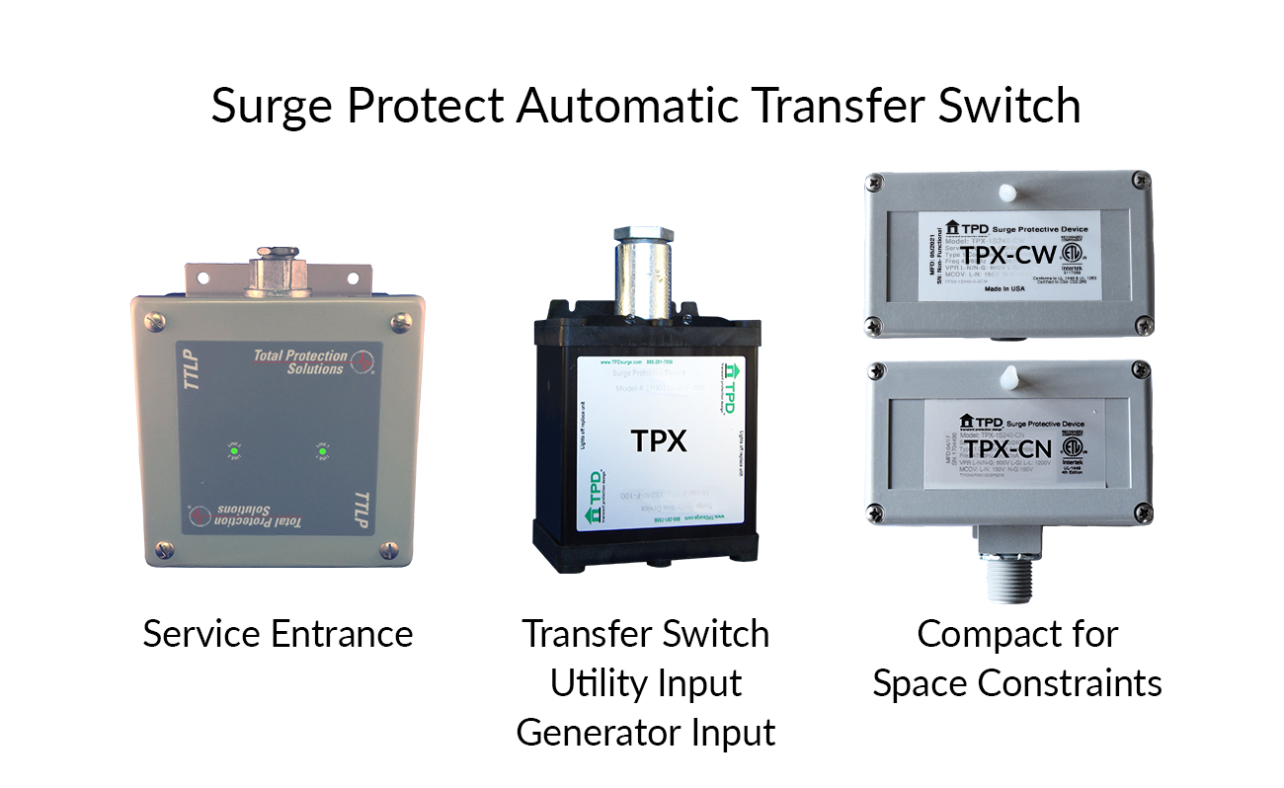
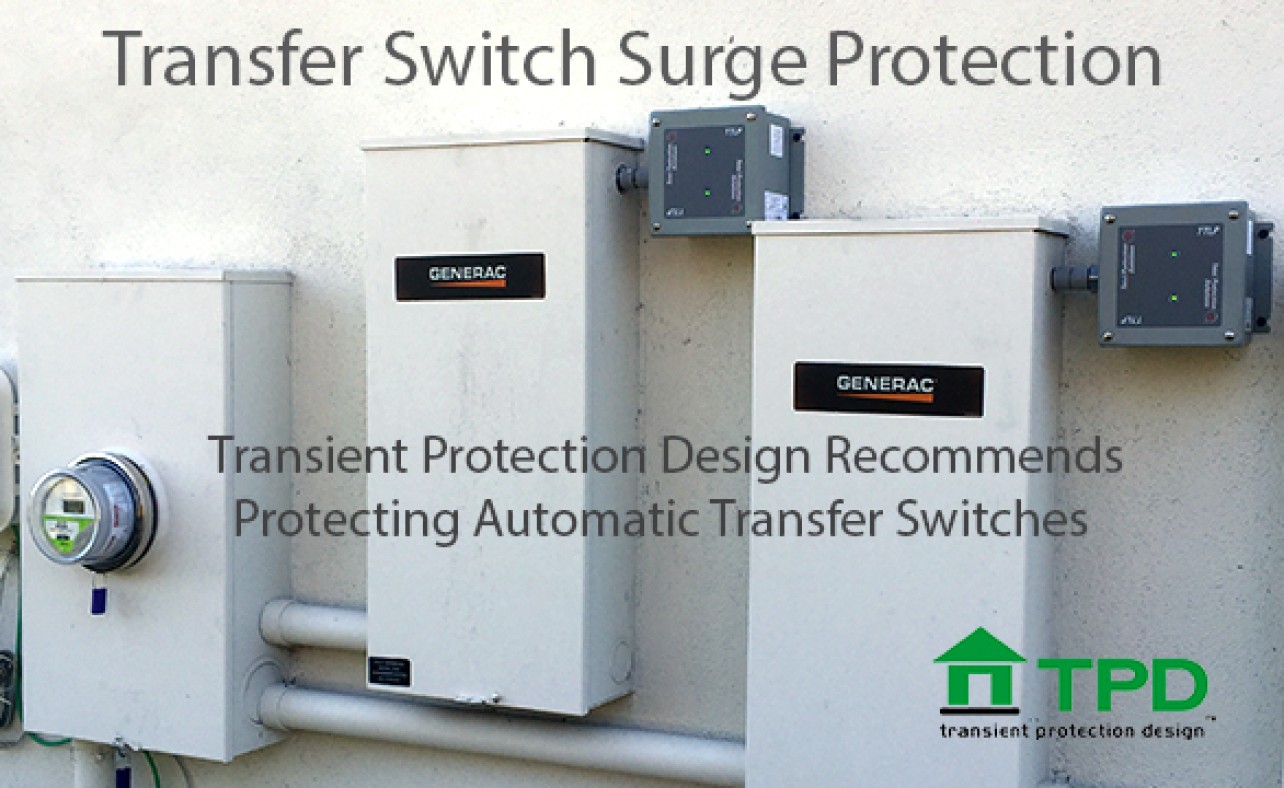
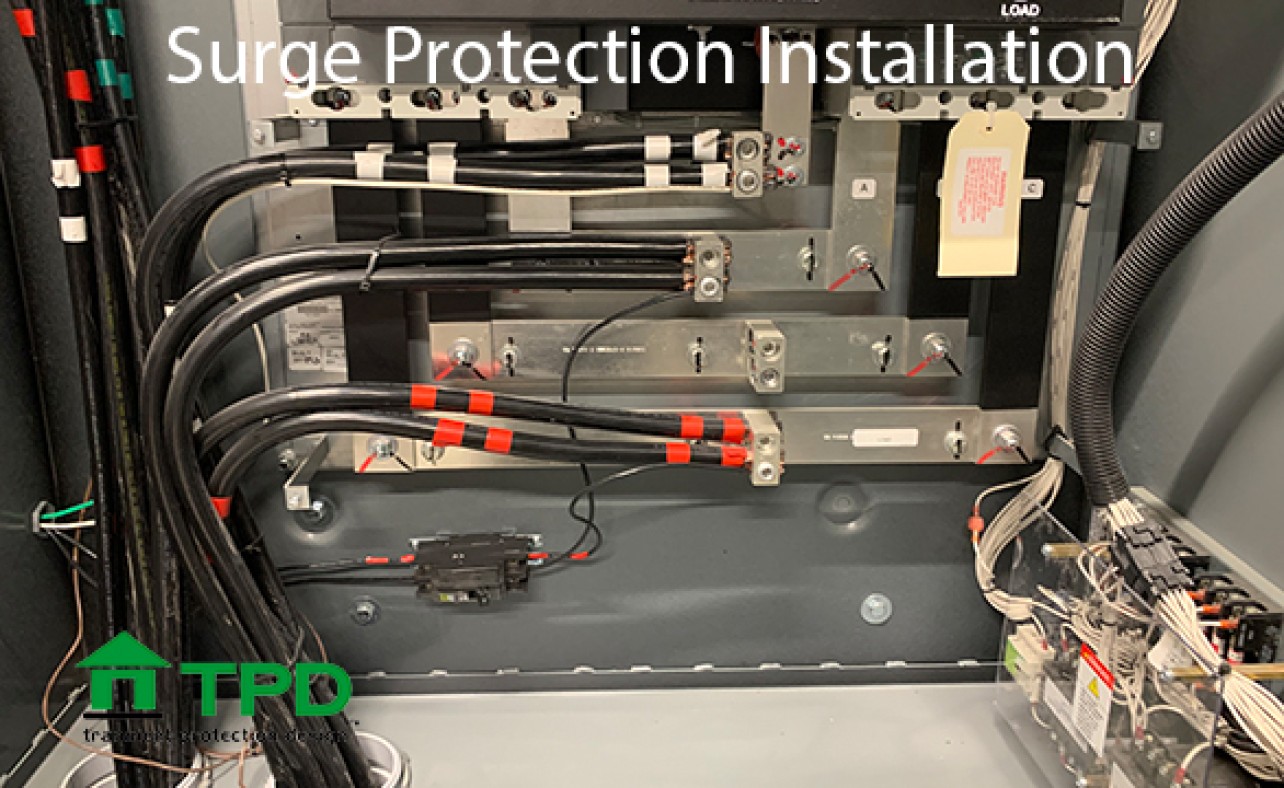
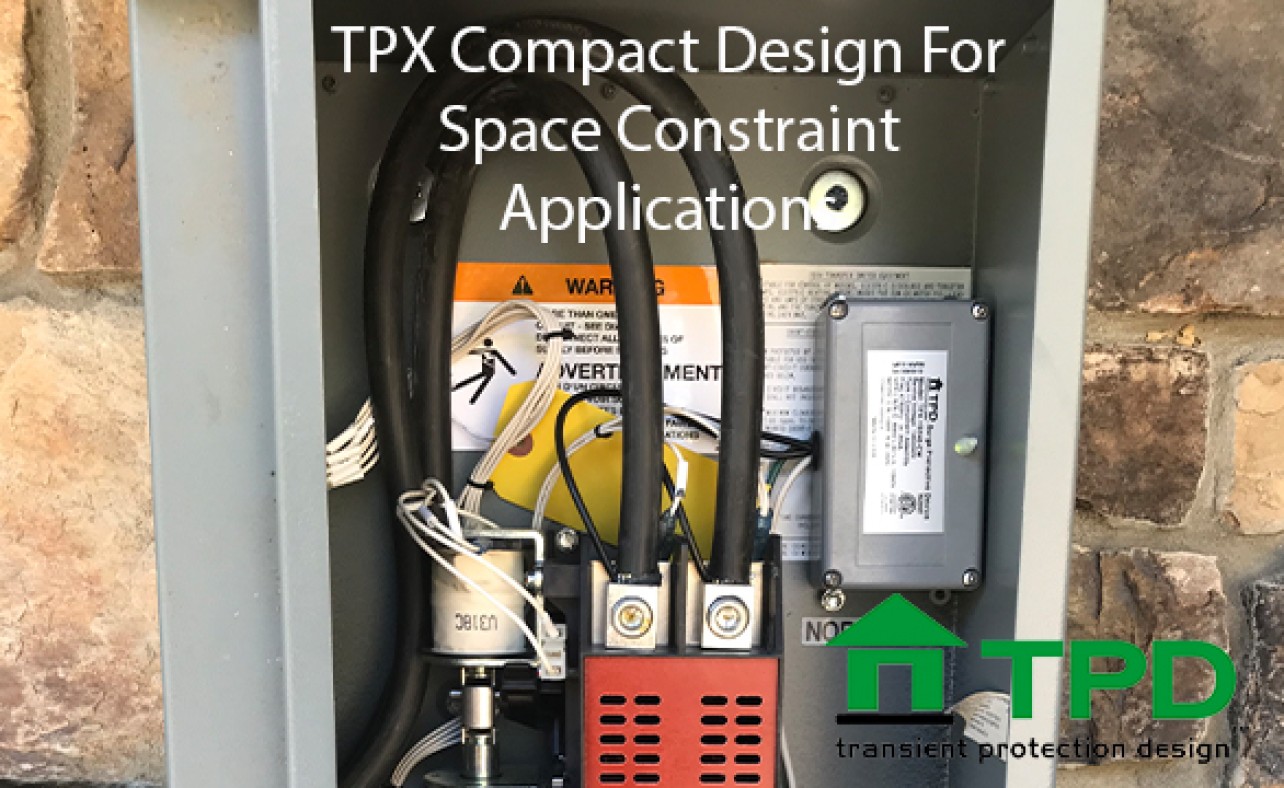
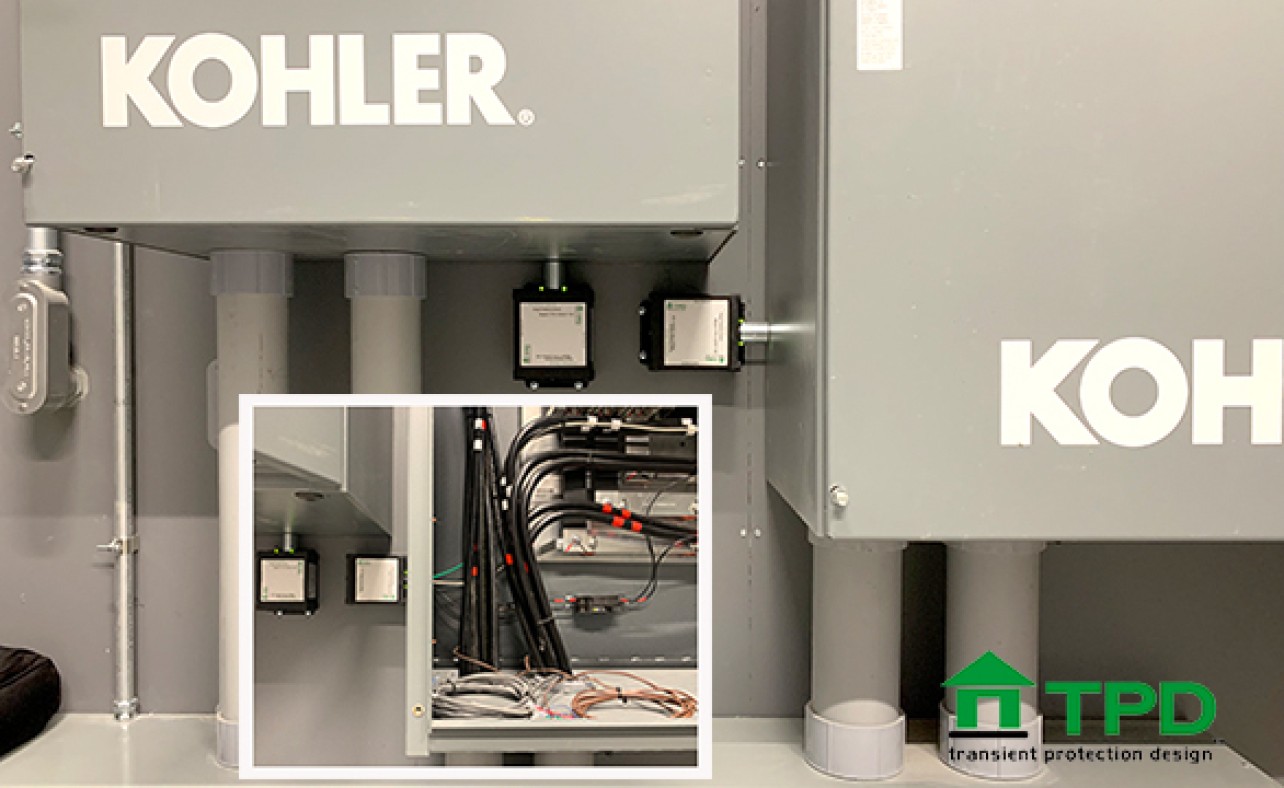
TK-TTLP-1S240-FL Service Entrance Disconnect
TPX-1S240-F-100 Downstream Breaker Panels
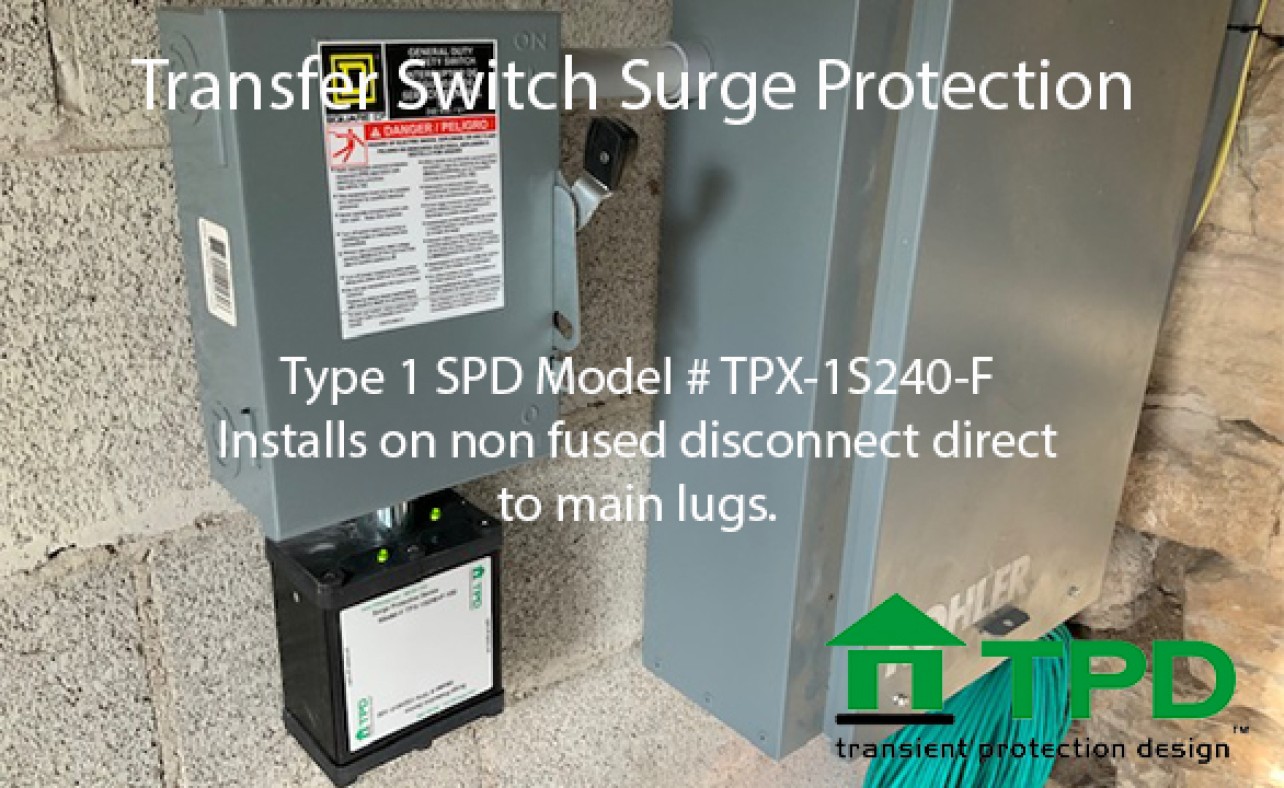
TPX-1S240-F Generator Feed at Transfer Switch
TPX-1S240-F Generator, Transfer Switch Output
TPX-1S240-CN Compact for Space Constraints
TPX-1S240-CW Compact with Wire Leads for Internal Locations
TPD eliminates transients & surges
which account for 85% to 95% of all
power issues, being the most common
and significantly the most damaging.
How to Surge Protect Generator and ATS
Service Entrance Disconnect/Utility Feed at Transfer Switch: TPX-1S240-F-150
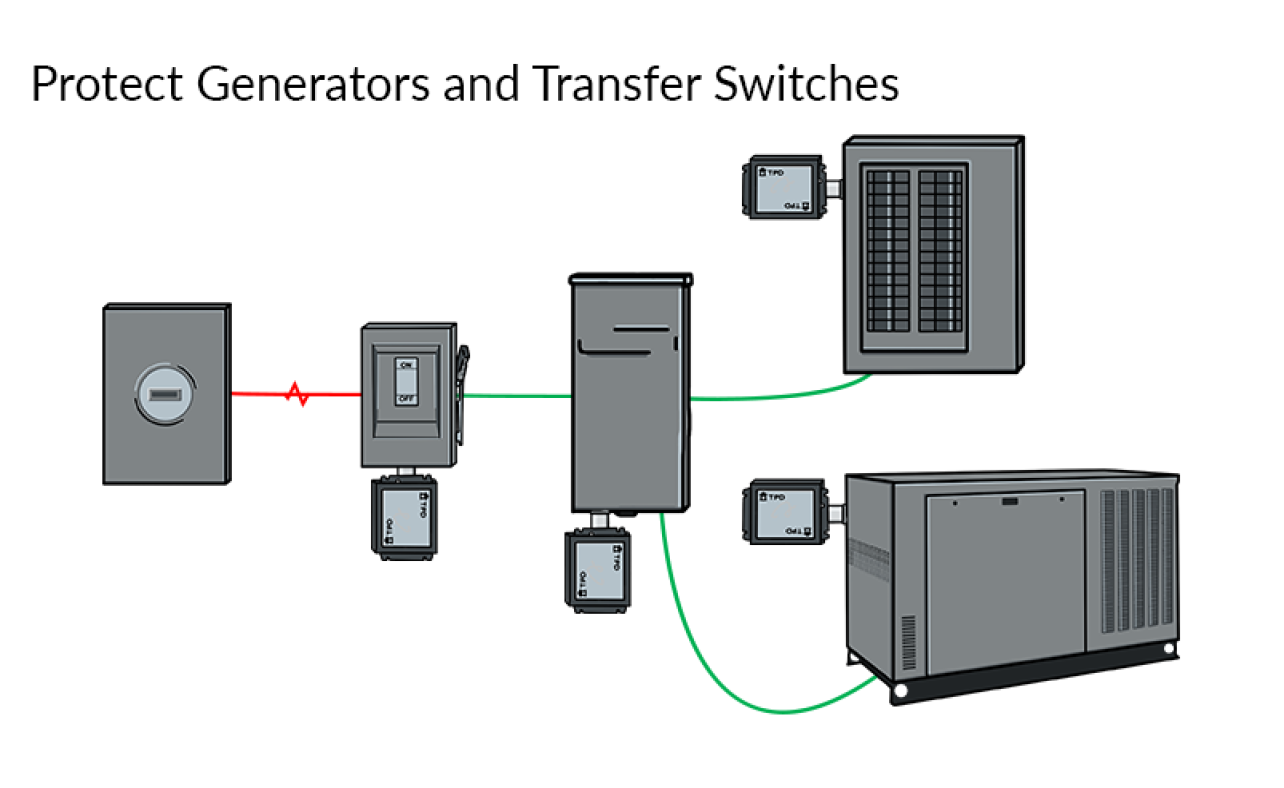
Install the TPX-1S240-F-150 at the service entrance disconnect for primary protection from utility-originated surges.
Protecting a generator and automatic transfer switch (ATS) begins at the service disconnect. Installing the TPX-1S240-F-150 at the service disconnect provides the first layer of surge protection for the entire facility, including the sensitive electronics inside the ATS.
Generator Feed at Transfer Switch: TPX-1S240-F or TPX-1S240-CN
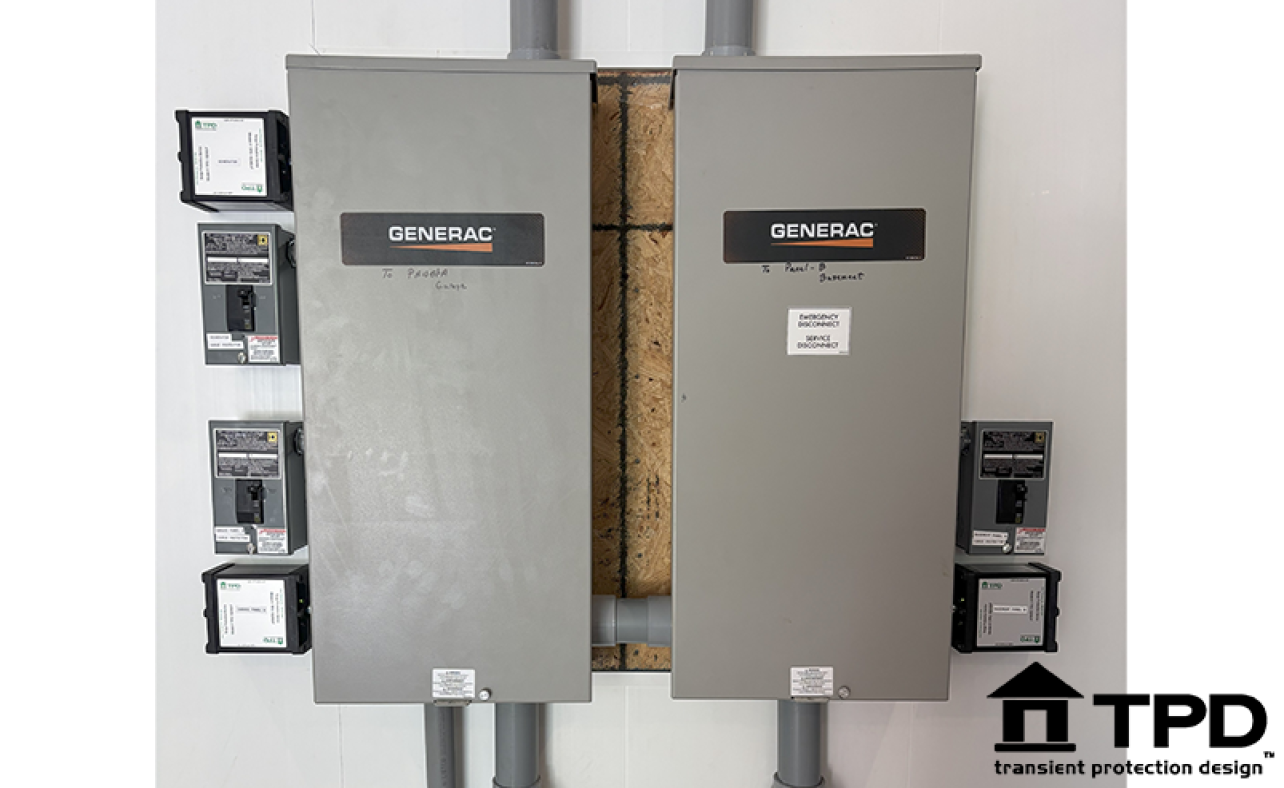
Install the TPX-1S240-F at the transfer switch to provide primary protection from generator-supplied power.
When generator power comes online, it must be treated as a separate surge pathway. For this reason, a second surge protective device should be installed at the ATS to protect generator-supplied power as it enters the facility. If there is a long outdoor conductor run to the generator where lightning energy can couple into the wiring, or if the generator includes sensitive charging boards and control electronics, an additional surge protector may be installed directly at the generator for enhanced protection.
Downstream Breaker Panels: TPX-1S240-F-100
Install the TPX-1S240-F on all downstream panels for secondary protection and suppression of internally generated surges.
Downstream breaker panels then receive the final layer of protection. This layer captures any residual surges that may bypass upstream devices and suppresses internally generated transients originating from motors, compressors, and switching events. This staged approach addresses the majority of surge activity and provides the most reliable long-term performance.
Generator: TPX-1S240-F or TPX-1S240-CN
Install the TPX-1S240-F directly at the generator in high-exposure locations or when surge protection of generator-mounted electronics is required.
Generator Communication: TPD-CAT6
Install the TPD-CAT6 on network communication lines between the generator and ATS, and again at the point where generator communications enter the building network.
Finally, low-voltage control and communication wiring between the generator and ATS must also be surge protected. These conductors are frequently the weakest link in the system and are often the first components damaged by lightning-induced surges.
This document illustrates the protection locations discussed above: Surge Protect Generators and Transfer Switches
Codes, Standards, and Industry Guidance
The National Electrical Code (NEC) requires surge protection on equipment supplied by emergency, legally required standby, and optional standby generator systems. NEC Articles 700.8, 701.8, and 702.8 mandate that switchboards and panel boards connected to generator systems be provided with surge protective devices. These requirements recognize that generator systems and automatic transfer switches contain sensitive electronic controls and that generator-supplied power can introduce both transient overvoltages and power-quality disturbances. Properly installed surge protection on automatic transfer switches and all generator-fed panels is required to ensure reliable operation and to prevent equipment damage during utility outages and emergency power events.
The Importance of Generator and ATS Surge Protection
Prevent Data Loss
Modern residential and commercial facilities rely heavily on electronic controls, automation systems, and networked devices. Properly applied surge protection protects both the generator system and connected equipment, reducing the risk of data loss and system corruption.
Reduce Repair Costs
Generator and ATS repairs can be costly and disruptive. Surge protection significantly reduces component stress and unexpected failures, lowering long-term maintenance and replacement costs.
Enhance Safety
Surge-induced failures can create unsafe electrical conditions and increase fire risk. Proper surge protection improves overall system safety in both residential and commercial installations.
Prevent Costly Downtime
Generator and ATS failures during outages can halt business operations and disrupt daily life. Surge protection improves system reliability and minimizes downtime during critical power events.
Protect Critical Infrastructure
Commercial and high-end residential facilities often support sensitive loads such as HVAC systems, controls, lighting systems, and data equipment. Surge protection ensures that backup power systems operate reliably and protect critical infrastructure during extended outages.
Surge Protection for Whole-Home Generators
Whole-home generators are increasingly installed in residences with complex electrical and electronic systems comparable to those found in commercial facilities. Lighting controls, automation systems, HVAC equipment, and networked devices are all vulnerable to power-quality disturbances originating from generator operation. Surge protection helps control generator-supplied power, protecting home electrical panels and connected equipment from damaging transients and ensuring reliable operation during outages.
Codes, Standards, and Industry Guidance
The National Electrical Code (NEC) requires surge protection on equipment supplied by emergency, legally required standby, and optional standby generator systems. NEC Articles 700.8, 701.8, and 702.8 mandate that switchboards and panel boards connected to generator systems be provided with surge protective devices. These requirements recognize that generator systems and automatic transfer switches contain sensitive electronic controls and that generator-supplied power can introduce both transient overvoltages and power-quality disturbances. Properly installed surge protection on automatic transfer switches and all generator-fed panels is required to ensure reliable operation and to prevent equipment damage during utility outages and emergency power events.