
Surge Protection for Gate Electronics
Surge protection for gates and gate electronics manufactured by companies such as 2N, DoorKing (DKS), LiftMaster, and FAAC Group is essential for protecting gate motors, control boards, keypads, and communication electronics from lightning-induced surges and transient overvoltage’s. TPD surge protection devices are applied to all copper pathways to and from the gate controller and operator, including power, control wiring, sensors, coax, and data. Properly implemented surge suppression improves system reliability, enhances safety, and significantly reduces service calls and equipment replacement for both residential and commercial gate systems.
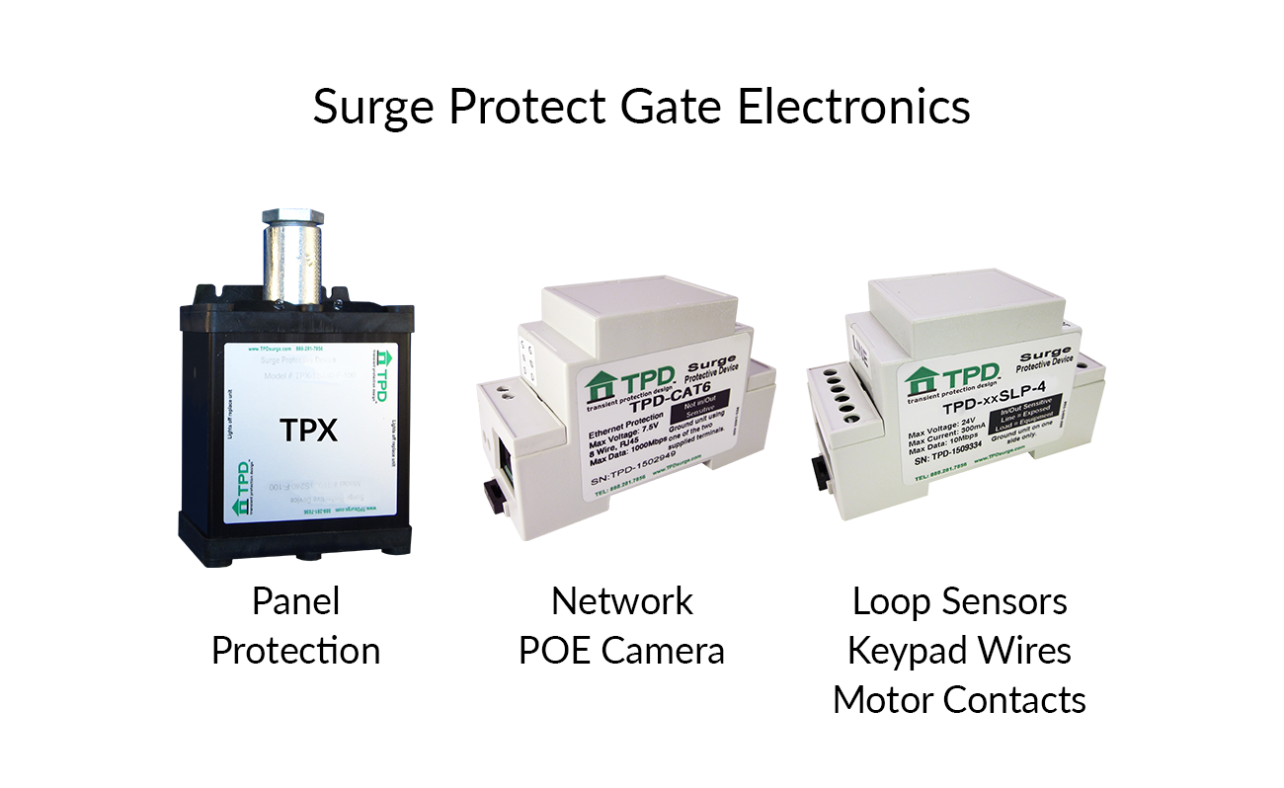
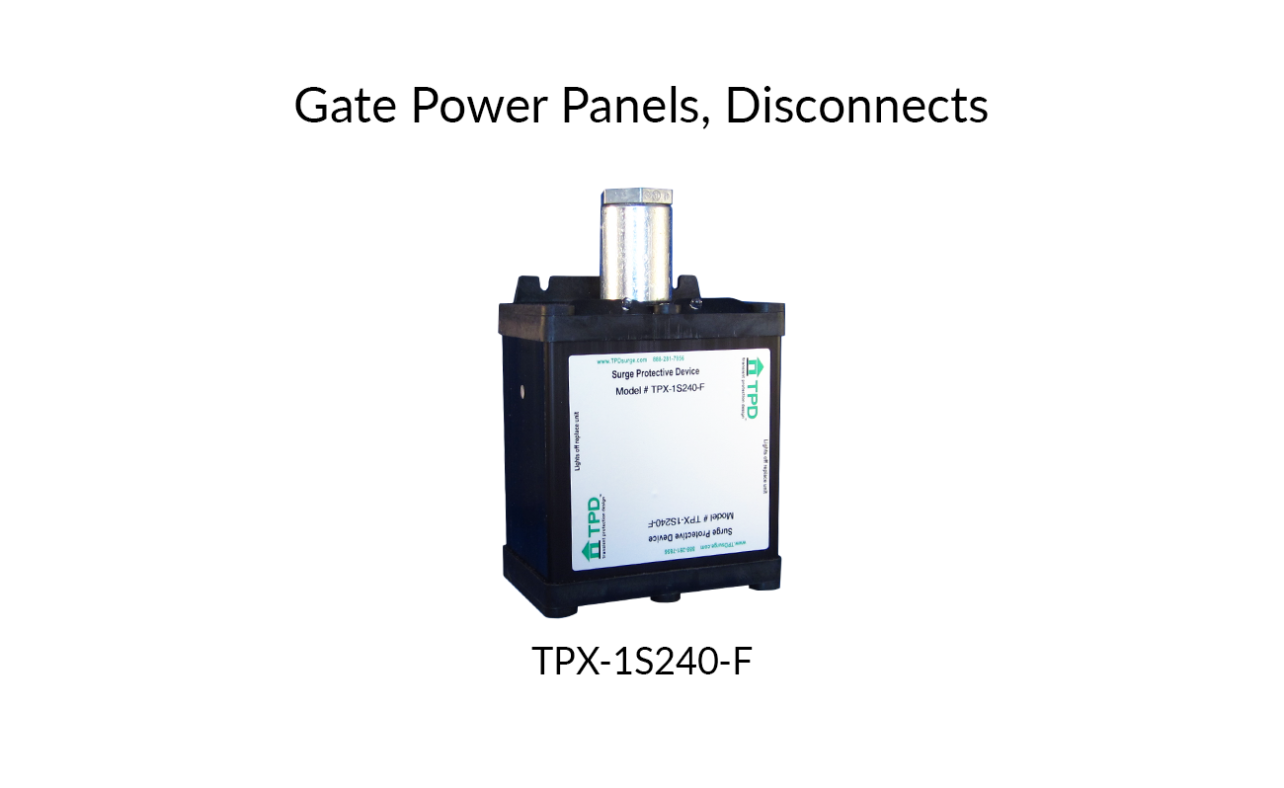
TPX-1S240-F Power Panels, Disconnects
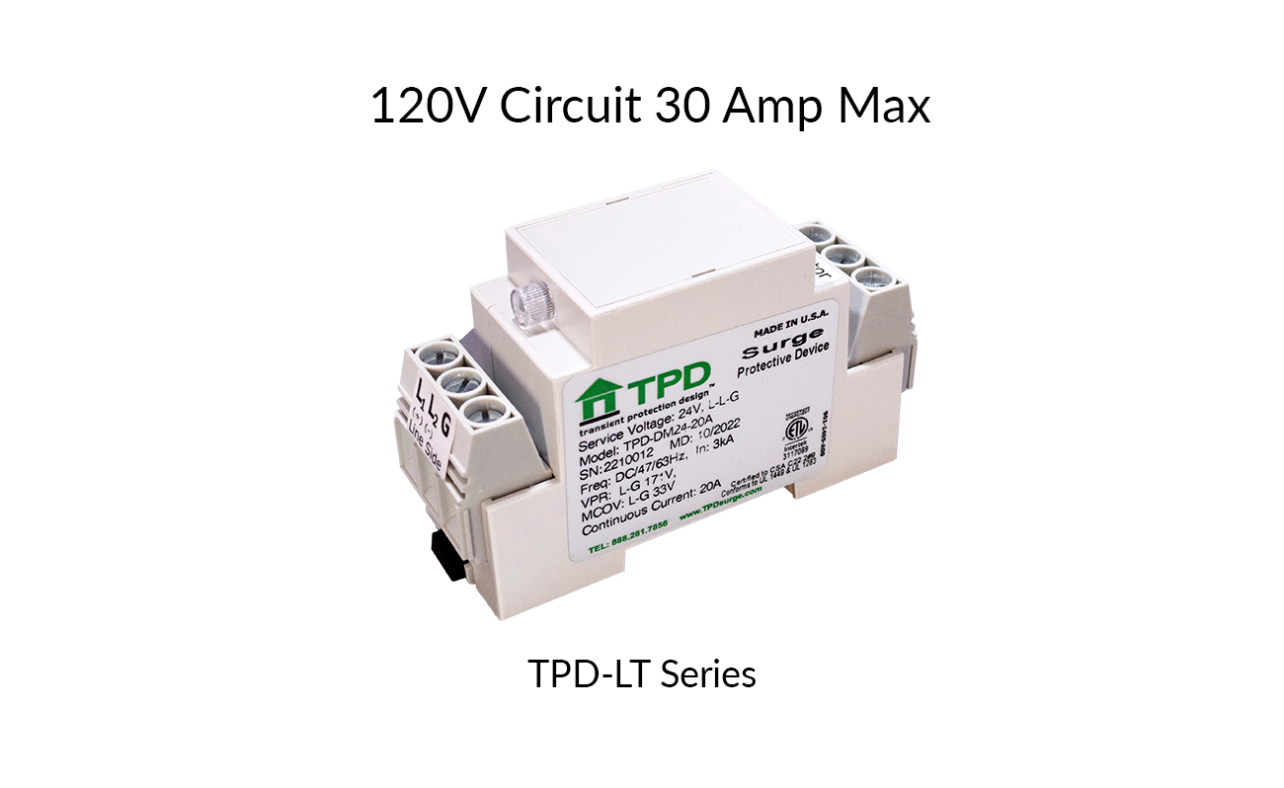
TPD-LT120-20A 120V Circuit 20 Amp Max
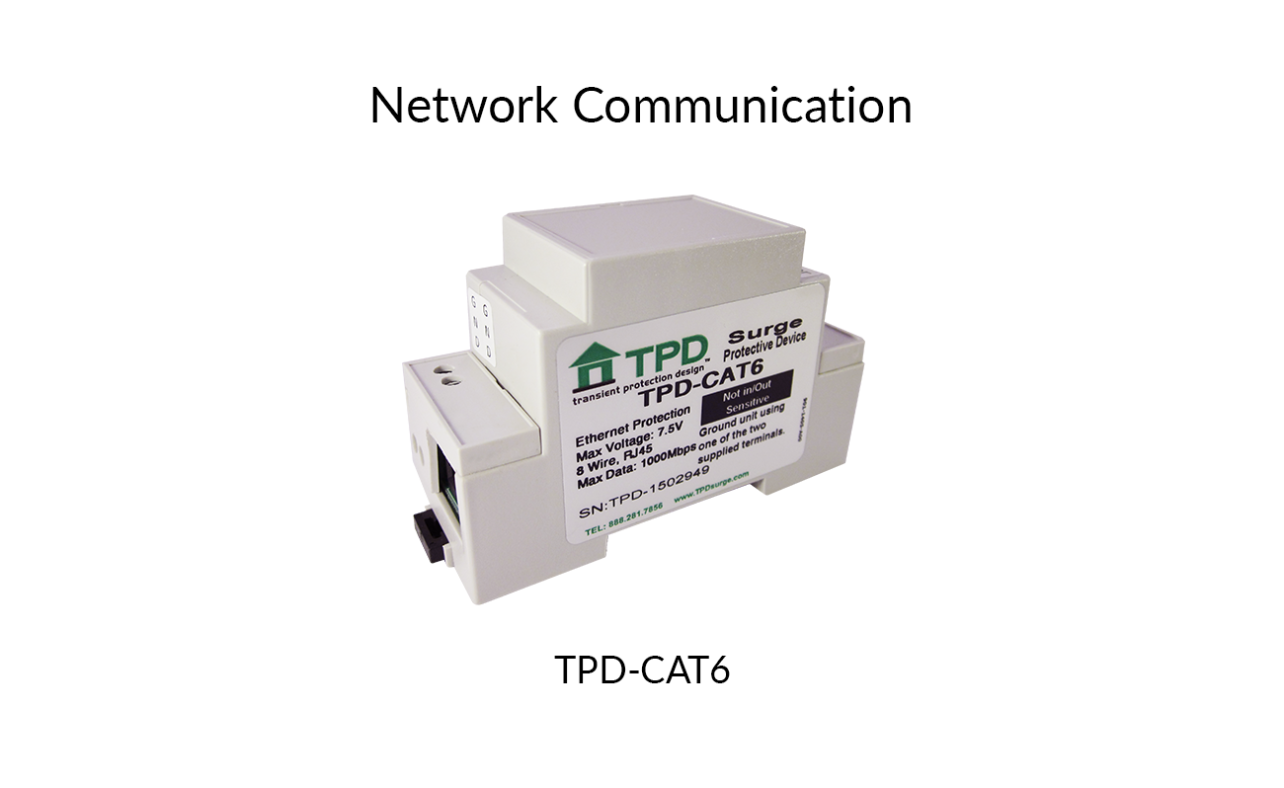
TPD-CAT6 Network Communication
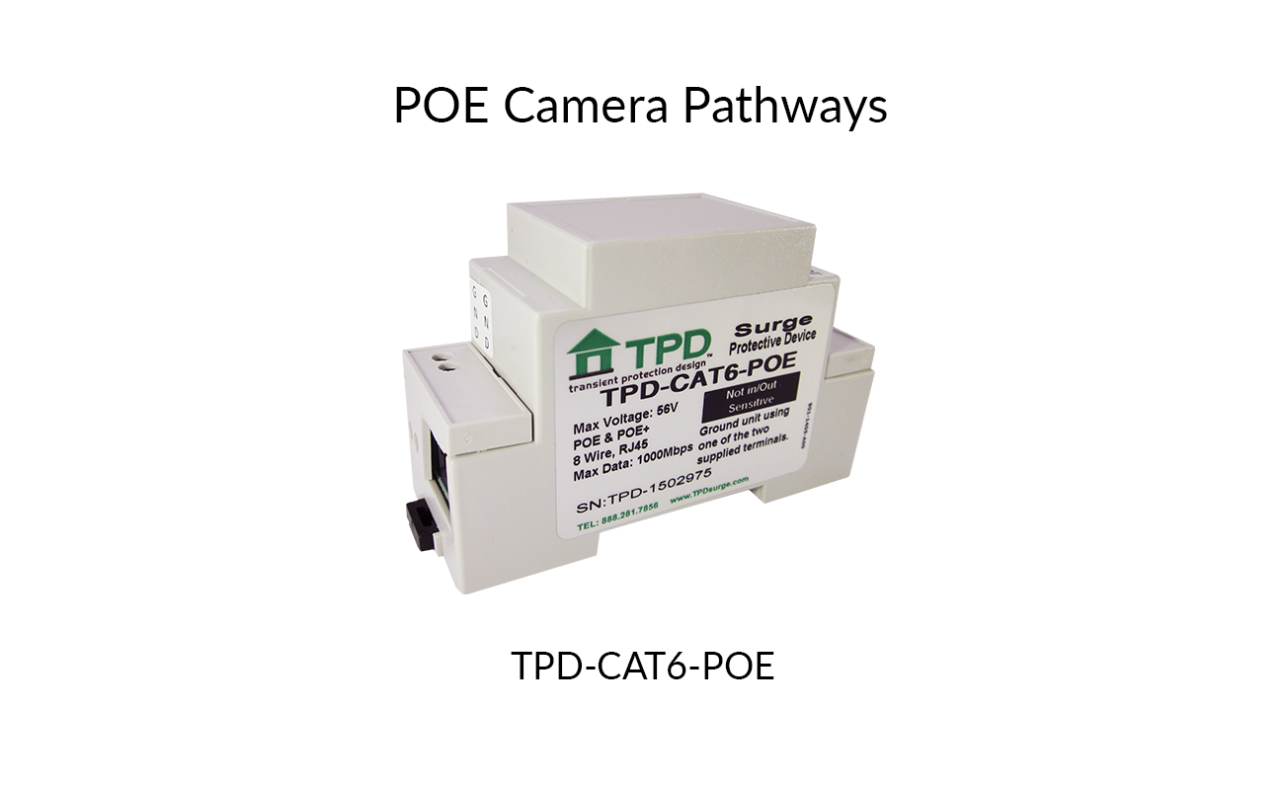
TPD-CAT6-POE POE Camera Pathways
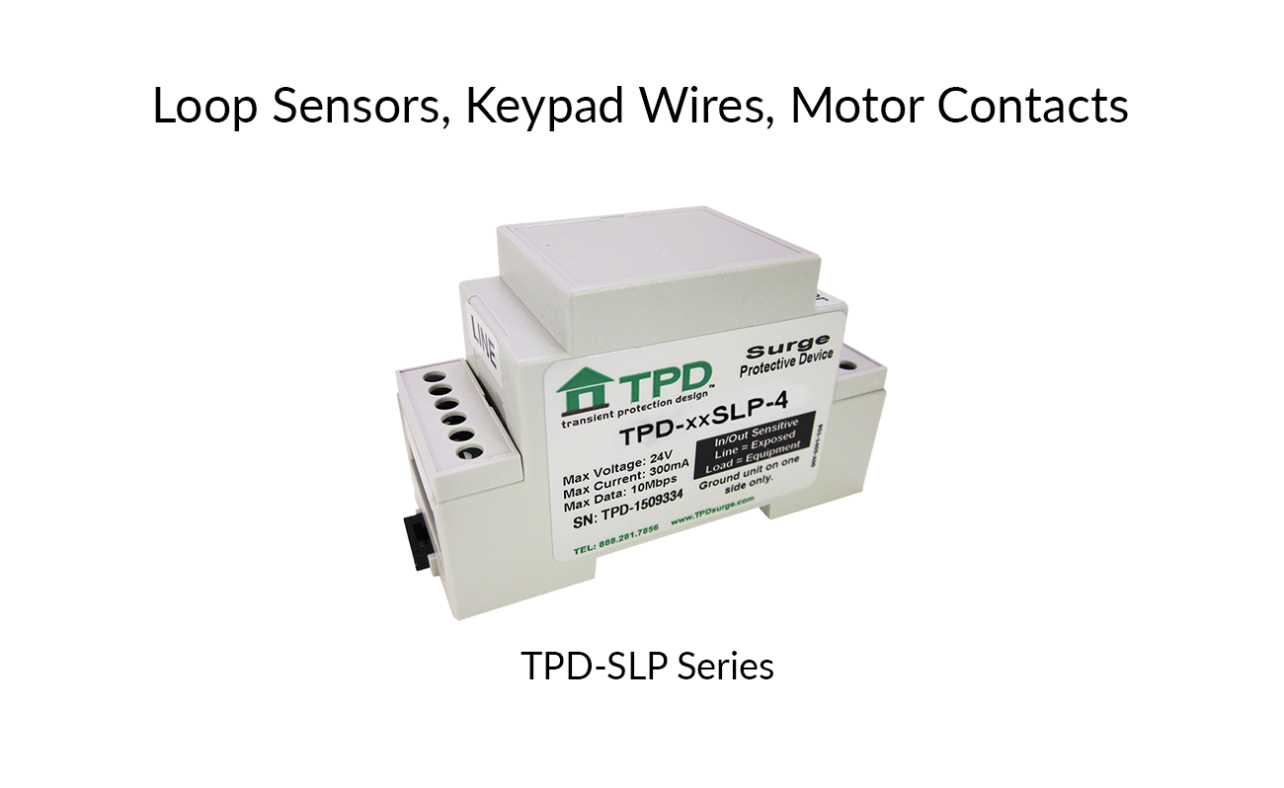
TPD-10SLP6 Loop Sensors
TPD-10SLP6 Keypad Wires
TPD-10SLP6 Motor Contacts
TPD eliminates transients & surges
which account for 85% to 95% of all
power issues, being the most common
and significantly the most damaging.
How to Surge Protect Gate Electronics
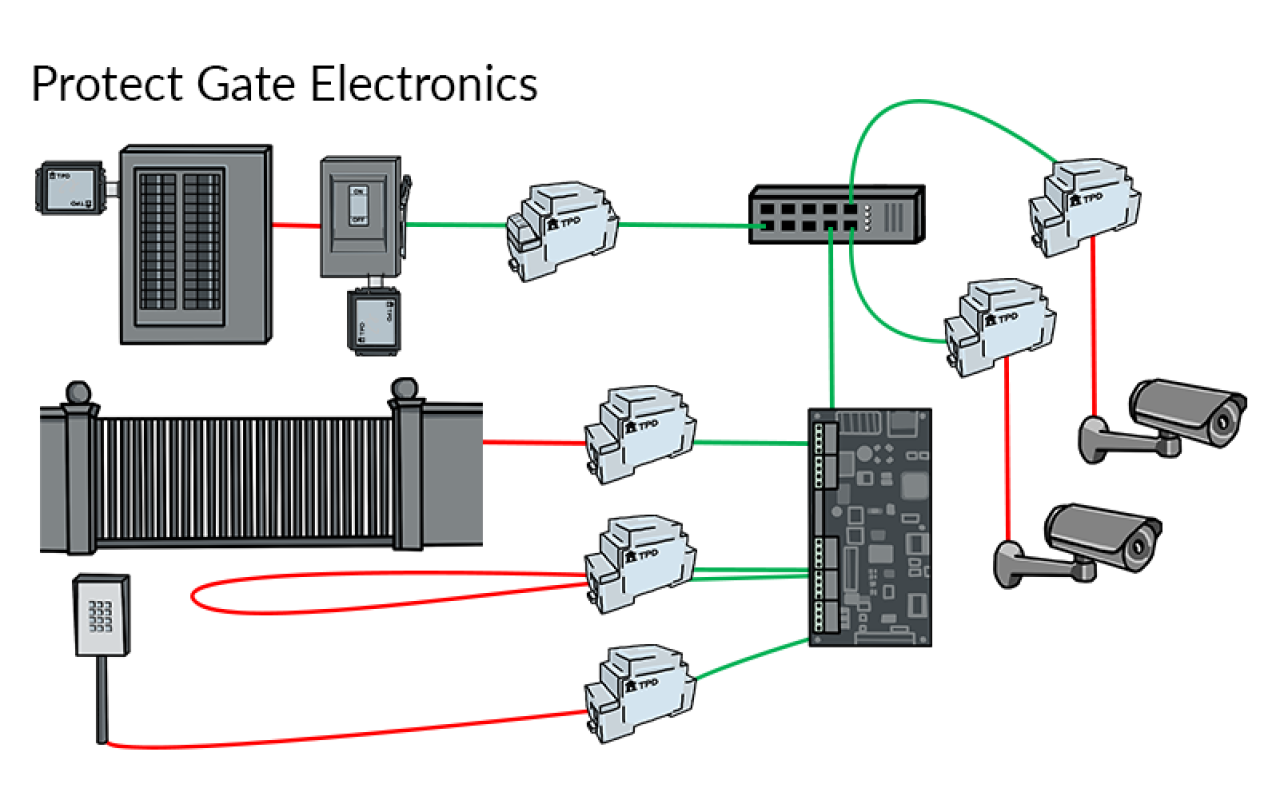
Gate Power Panels or Disconnects: TPX-1S240-F
Install the TPX-1S240-F-100 on gate power panels or disconnects feeding gate equipment.
120V Power at Gate Cabinet: TK-LT120-20A-DIN2
Install the TK-LT120-20A-DIN2 on 120V branch circuits inside the gate cabinet.
Network Communication: TPD-CAT6
Install the TPD-CAT6 on communication wiring at the gate and again at the building end.
POE Camera Pathways: TPD-CAT6-POE
Install the TPD-CAT6-POE on outdoor camera pathways feeding gate cameras to prevent surges from entering the network.
Loop Sensors: TPD-24SLP6
Install the TPD-24SLP6 on loop detector wiring ahead of the gate controller.
Keypad Wires: TPD-24SLP6
Install the TPD-24SLP6 on keypad wiring at the controller or within the gooseneck when space permits.
Motor contacts: TPD-24SLP6
Install the TPD-24SLP6 on motor contact leads at the controller.
Installation Note
Protect both ends of low-voltage communication wiring when both connected systems require protection. Gate surge protection starts with the power feed, which may originate from a dedicated gate panel or a 120V circuit from a nearby structure. Communication and control wiring may be protected at one or both ends depending on what equipment is being protected. The greater the distance between the gate and the structure, the higher the likelihood of lightning-induced surge issues on those pathways.
Applications and Common Problems Solved
Residential Driveway Gates
Single-motor residential driveway gates with a keypad represent one of the most common failure points we see. These systems typically include long 120V power runs from the house and low-voltage control or keypad wiring returning to the home. Long wire runs act as antennas during lightning events, allowing induced surges to travel directly into motors and control boards. Metal gates and fencing further increase exposure. With proper TPD surge protection on both power and control wiring, these systems become highly reliable and far less costly to maintain.
Dual-Leaf Driveway Gates
Dual-leaf driveway gates introduce additional surge exposure through multiple motors, sensors, and shared or daisy-chained wiring. During storm activity, these systems may experience nuisance behavior or component failures due to surge energy entering on either leaf. Each motor and sensor becomes a potential surge entry point. Properly applied TPD surge protection on both power and communication wiring stabilizes operation and prevents cascading failures.
Residential Estates with Multiple Gates
Large estates with multiple entry points, service gates, and remote property gates face elevated risk due to long wire distances and multiple buildings feeding different gate systems. Shared communication lines and access control wiring allow surge energy from a distant lightning event to propagate back toward other gates or the main residence. We routinely see damage occur hundreds of feet away from the strike location. Proper TPD surge suppression, grounding, and isolation prevent backfeeding and protect complex multi-gate installations.
The Importance of Gate Electronic Surge Protection
Convenience, Security, and Access Control
Gate systems are a primary access-control layer for both residential and commercial properties. Surge-related failures can disrupt daily operations, compromise security, or leave facilities inaccessible. TPD surge protection ensures reliable, uninterrupted operation.
Protect Expensive Equipment
Gate motors, control boards, loop detectors, keypads, and access control electronics are costly to replace. TPD surge protection devices reduce component stress and extend equipment life.
Minimize Downtime
Gate failures create immediate operational issues and service calls. Proper TPD surge protection dramatically reduces downtime and emergency repairs.
Enhance Safety
Gate systems rely on safety loops, photo eyes, and sensors to prevent injury or property damage. Surges can disable these safety features. TPD surge protection preserves safe operation.
Preserve Property Value
Well-maintained gate systems improve curb appeal, property value, and long-term system performance.
Why Gates Experience High Lightning and Surge Damage
Gate systems are highly susceptible to lightning-induced surges because they are electrically connected to a structure while physically located far from it and often in open areas. Long power and control wiring runs provide a direct pathway for lightning energy, whether from direct strikes or nearby strikes occurring hundreds or even thousands of feet away. Metal gates and fencing further increase exposure by acting as lightning attractors. Surge energy can travel toward both the gate equipment and the structure feeding it, damaging motors, control boards, keypads, and house-side electronics. Communication lines present an additional pathway for damage. Gated communities and large properties often spend tens of thousands of dollars annually on gate service calls caused by unprotected pathways.
Codes, Standards, and Industry Guidance
Gate systems involve a combination of line-voltage power, power-limited control circuits, and communication wiring, all of which fall under multiple articles from the National Electric Code (NEC) related to grounding, bonding, and surge protection. Long outdoor wiring runs, separate structures, and exposed equipment increase the likelihood of transient overvoltages.
The NEC increasingly recognizes the importance of surge protection for equipment connected by outdoor conductors and communication pathways. Applying surge protective devices at gate power sources, controllers, and communication interfaces aligns with NEC intent to improve equipment reliability, reduce damage, and enhance safety. Proper bonding and grounding are critical to ensure surge protective devices operate correctly and that all connected systems rise and fall together during transient events.